Free UK/DE/FR/IT/ES/US Shipping, Other Countries (Free on Orders Over £50) SHOP NOW

In today’s screen-addicted digital age, from checking our phones the moment we wake up, to staring at office computers all day, to relaxing with binge-watching or gaming at night, our eyes are constantly subjected to the glow of electronic screens.
Dry, sore, and blurry eyes have become a common modern ailment. To alleviate these symptoms, blue light glasses have emerged as the standard “eye-protection gear” for office workers and students alike.
Since these glasses protect our eyes, can I just put them on before leaving the house in the morning and take them off right before bed to save trouble? Is this “24/7 physical defense” really the best way to protect your eyes?
The answer isn’t a simple “yes” or “no.” To understand this, we first need to strip away the “villain label” often attached to blue light and reacquaint ourselves with this important member of the light spectrum.
Is Blue Light Really the Ultimate Eye Killer?
Blue light is everywhere in nature, and its biggest source is actually the sun above us. However, with technological advancements, artificial light sources and electronic devices—such as computer screens, smartphones, tablets, and fluorescent lights—have become another major source of blue light in our modern lives.
Marketing often paints blue light as the sole culprit behind myopia and eye diseases. In reality, not all blue light is harmful. Science divides it into “harmful blue light” and “beneficial blue light.”
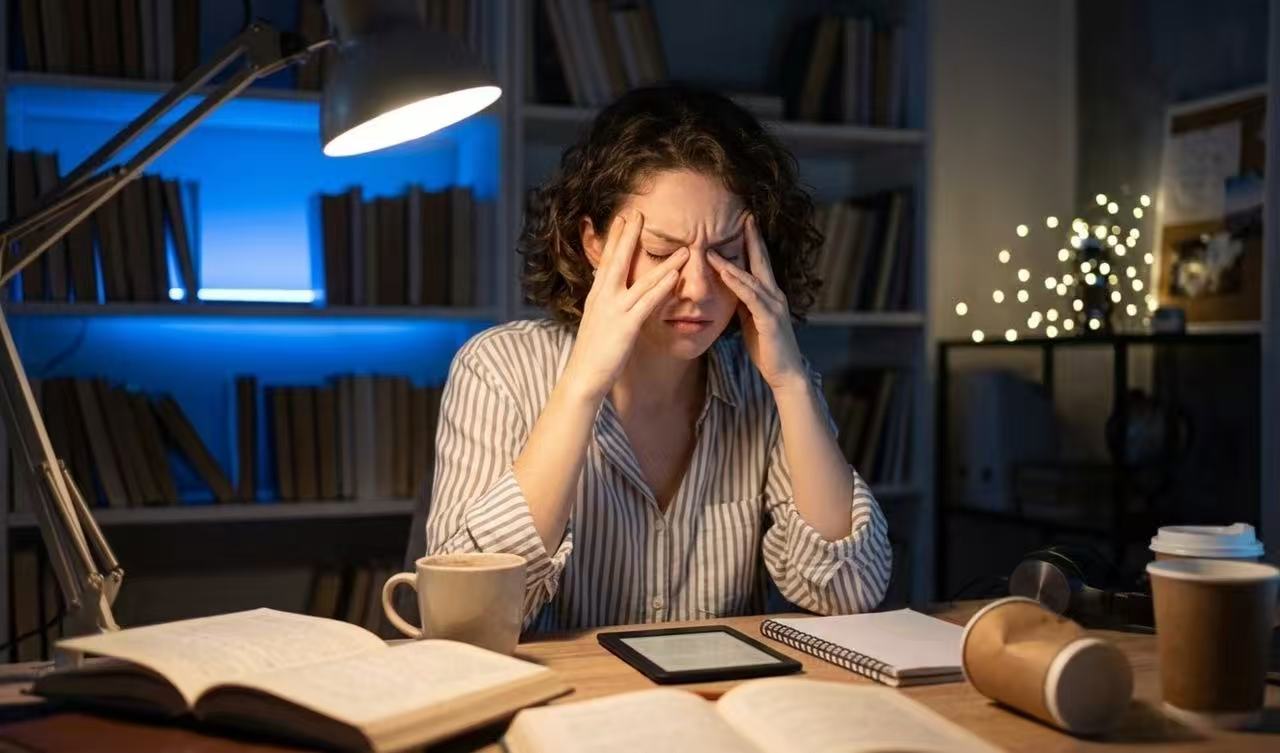
- Harmful Blue Light: This light carries extremely high energy and can penetrate straight to the macular area of the retina. Prolonged, high-intensity exposure (like staring at screens in the dark) can cause retinal damage, exacerbate visual fatigue, and cause dry eyes. This is the primary target that protective eyewear aims to block.
- Beneficial Blue Light: This light is not only harmless but acts as a natural metronome for our biological clock. Morning sunlight is rich in beneficial blue light, which stimulates the brain to secrete hormones that keep us alert, elevate our mood, and sharpen our focus. You could say beneficial blue light is our “natural caffeine” during the day.
So here is the question: Can the glasses you wear all day tell the difference between “good” blue light and “bad” blue light?
Wearing Them All Day: Protection or Interference?
While blue light glasses successfully filter screen glare, wearing them from morning to night like a “semi-permanent” fixture isn’t scientifically sound.
- Indoor Office (The Vision Bodyguard): When facing digital devices, protection is a necessity. Wearing blue light glasses can reduce harsh glare, dry eyes, and screen flicker. It acts as a pressure relief valve for prolonged screen time.
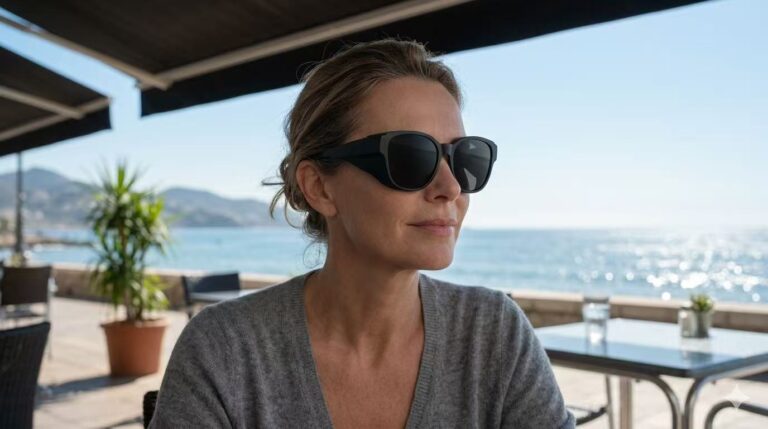
- Outdoor Scenarios (The Energy Killer): Natural outdoor light contains the “good blue light” needed to regulate your mood and circadian rhythm. If you wear high-blocking tinted glasses in the sun, your brain might not receive enough light signals. It might mistakenly think “it’s getting dark,” leaving you feeling sluggish, sleepy, and potentially affecting your mood long-term.
- Visual Experience (The Color Interference): Protective lenses usually have a base tint, meaning you see the world through a filter. This not only causes color distortion for professionals like designers but also forces the average person’s eyes to work harder to adapt to dim, color-shifted environments, easily causing visual fatigue.
Advanced Eye Care: The “Day-to-Night” Color Management Strategy
If you deeply care about how light affects your retinas, or if you are a “bio-hacker” chasing peak lifestyle efficiency, the ultimate strategy is never relying on just one pair of glasses. Just as we wear sunglasses based on sunlight intensity, we need to match different lens colors to our circadian rhythm.
This “day-to-night” strategy allows you to stay comfortable all day while precisely blocking different intensities of light damage.
Daytime Strategy: Light Protection for Multiple Scenarios (Light-Tinted Lenses)
During the day, we need to keep our brains alert while defending against the harsh light from office computers, phones, and cold indoor lighting.
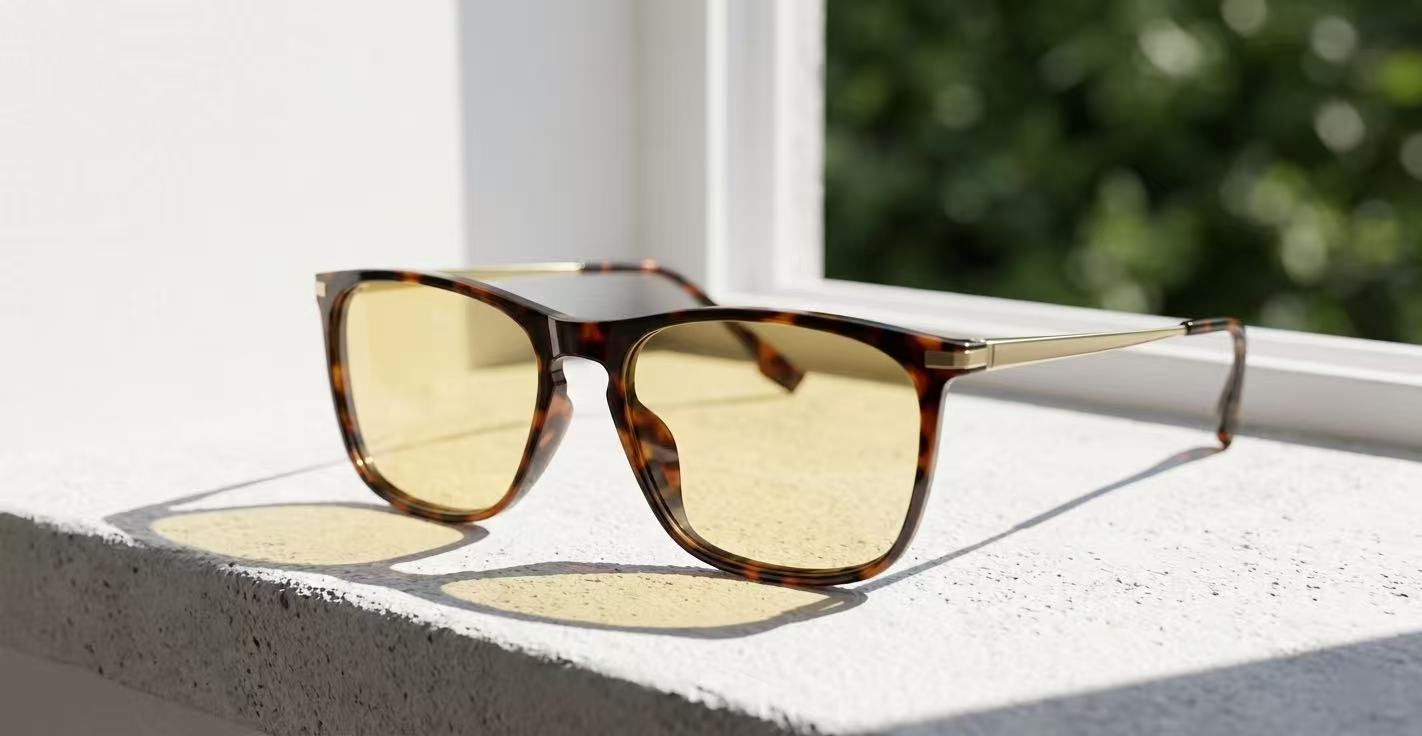
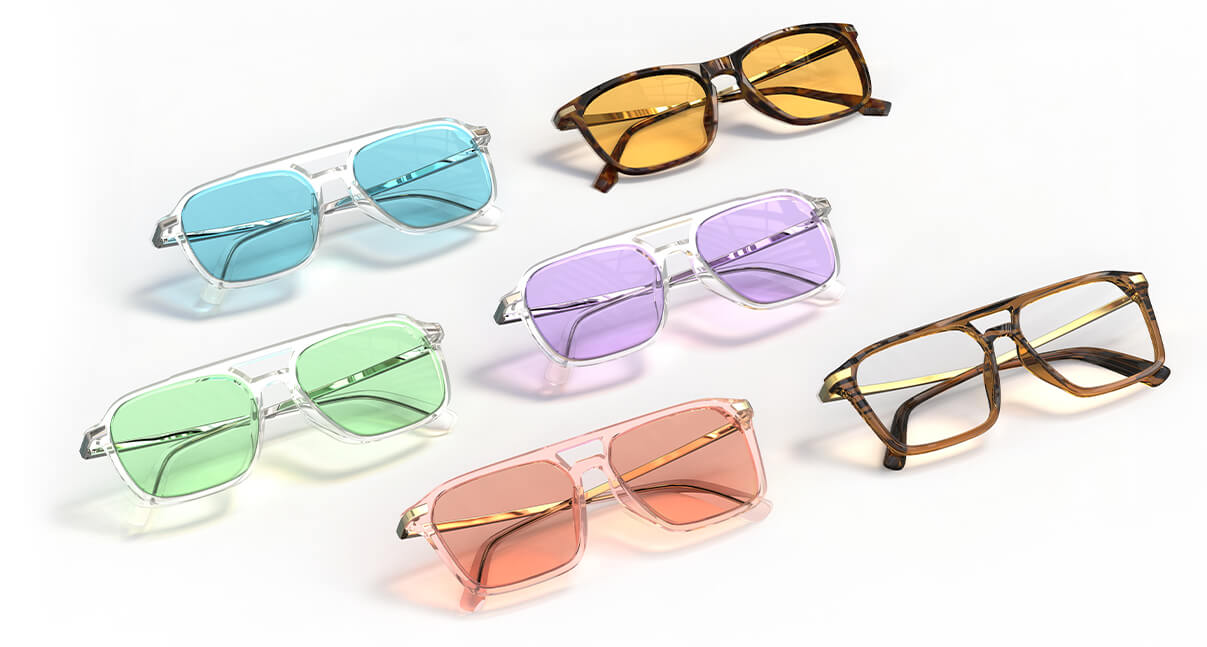
In this case, daytime blue light blocking glasses are the best choice. Light-tinted lenses accurately block harmful blue light while allowing enough light transmission to keep you focused and refreshed. Goiteia offers multiple options from clear to amber, each with its own “visual personality”:
- Minimalist Clear: Clear blue light glasses barely alter your color perception, making them perfect for all occasions. They are the top choice for daily wear, meetings, and seeing clients, invisibly filtering out the harshest screen reflections.
- Blue/Purple/Green Series: These fashionable, light-colored lenses partially filter harmful blue light. Without dimming your view, light blue tinted glasses (and similar cool tones) subtly soften the harsh “electronic feel” of screens. They are ideal for light screen users (like brief office work or casual browsing), providing essential protection while keeping your vision crisp and natural.
- Yellow/Amber Series: If you are a heavy gamer or a writer, yellow lens glasses or amber lens glasses act as visual enhancers. They block more harmful blue light and significantly boost visual contrast, making screen details much clearer. This effectively relieves eye soreness and reduces blue-light-induced fatigue.
Nighttime Strategy: Deep Shielding for “Sleep Mode” (Deep-Tinted Lenses)
When night falls and ambient light dims, our challenge completely changes. The biggest enemy is no longer visual fatigue, but “melatonin suppression.”
Studies show that even 10 minutes of phone use before bed can trick the brain into thinking “it’s daylight,” halting melatonin production and causing shallow or difficult sleep.
At this time, you need to switch to Goiteia’s maximum-defense nighttime blue light glasses. These dark lenses create a perfect “artificial dusk” for your eyes:
- Who it’s for: People who love scrolling before bed, have mild trouble falling asleep, or experience poor sleep quality.
- Core Feature: They block 100% of blue light, effectively minimizing sleep interference. They create a soft, “sunset-like” environment that naturally nudges the brain toward sleepiness.
- Who it’s for: People suffering from severe insomnia, chronic sleep struggles, shift workers, or those extremely sensitive to light.
- Core Feature: The absolute ceiling of protection. These red lens glasses achieve a 100% block rate for both blue and green light.Red Lens Glasses act as a strong “shut-down command” to the brain. By cutting out all light interference, Red lens glasses act as the ultimate sleeping glasses, helping you get back to that deep, “fall asleep as soon as your head hits the pillow” state.
- Wearing Suggestion: Put them on 2 to 3 hours before bed. As you wear them while brushing your teeth or doing your skincare routine, your body is already pre-producing melatonin. By the time you take them off and lie down, sleepiness will wash over you like a tide.
The Hidden Risk of All-Day Wear: Don’t Let Psychological Dependence Ruin Your Eyes
Aside from melatonin disruption and color shift, the biggest risk of wearing them all day is the psychological “false sense of security.”
Many people treat blue light glasses like a magic pill, recklessly pulling all-nighters on their phones or gaming for four hours straight without blinking. The truth is, the core reasons for the sharp decline in modern eyesight and frequent dry eyes aren’t just blue light, but two simple physical actions we ignore:
- Not Blinking: Normally, we blink 15 to 20 times a minute to lubricate our eyes. But under the high stress of staring at a screen, that rate drops to about 5 times a minute. Your eyes aren’t being “blinded” by blue light; they are drying out.
- Screen Distance is Too Short: Staring at a screen less than half a meter away forces the ciliary muscles inside your eyes into a state of continuous contraction. Even with the best glasses in the world, if your eye muscles don’t get a break, worsening myopia and eye strain are inevitable.
Conclusion & Scientific Eye Care Advice
Let’s return to the question at the start of the article: Can you wear blue light glasses all day?
The answer is: If you are looking at screens all day, yes; but if you go outdoors or are getting ready for bed, change your strategy.
Blue light glasses are a “functional tool,” not an organ growing on our faces. The smartest approach is to armor up in the digital world and free your eyes in the real world.
- Indoors/Office: They are your “vision bodyguard.” Wear them firmly when facing screens.
- Outdoors/Rest: They are an “energy barrier.” Let your eyes embrace natural light and experience true colors.
In addition to equipping yourself with protective eyewear, please etch these three “Golden Rules” of eye care into your mind:
- Follow the 20-20-20 Rule: This scientifically proven method works better than any glasses. Every 20 minutes of screen time, look at something 20 feet away for 20 seconds. That is enough time for your ciliary muscles to stretch and relax.
- Adjust Ambient Lighting: Never look at your phone in a pitch-black room. The massive contrast between screen brightness and room darkness is a direct trigger for worsening astigmatism and vision loss.
- Practice Blinking: When your eyes feel dry, try squeezing them shut tightly for 2 seconds and opening them to actively squeeze out tears.
Glasses can help block harmful light, but they cannot block the bad habits that overdraw your health. Rather than relying entirely on a small pair of lenses, put your phone down right now and go look at the view from your window.