Free UK/DE/FR/IT/ES/US Shipping, Other Countries (Free on Orders Over £50) SHOP NOW

When choosing blue light glasses, many people have an intuitive assumption:
👉 Darker lenses = stronger blue light blocking
It sounds reasonable, but in reality, this is only partly true—and often misleading.
In this article, we’ll break down the science and user concerns, helping you understand:
- What blue light glasses actually block
- The relationship between lens color and protection
- Why some clear blue light glasses can still be effective
- How to choose the right glasses for your needs
What is blue light and why block it?
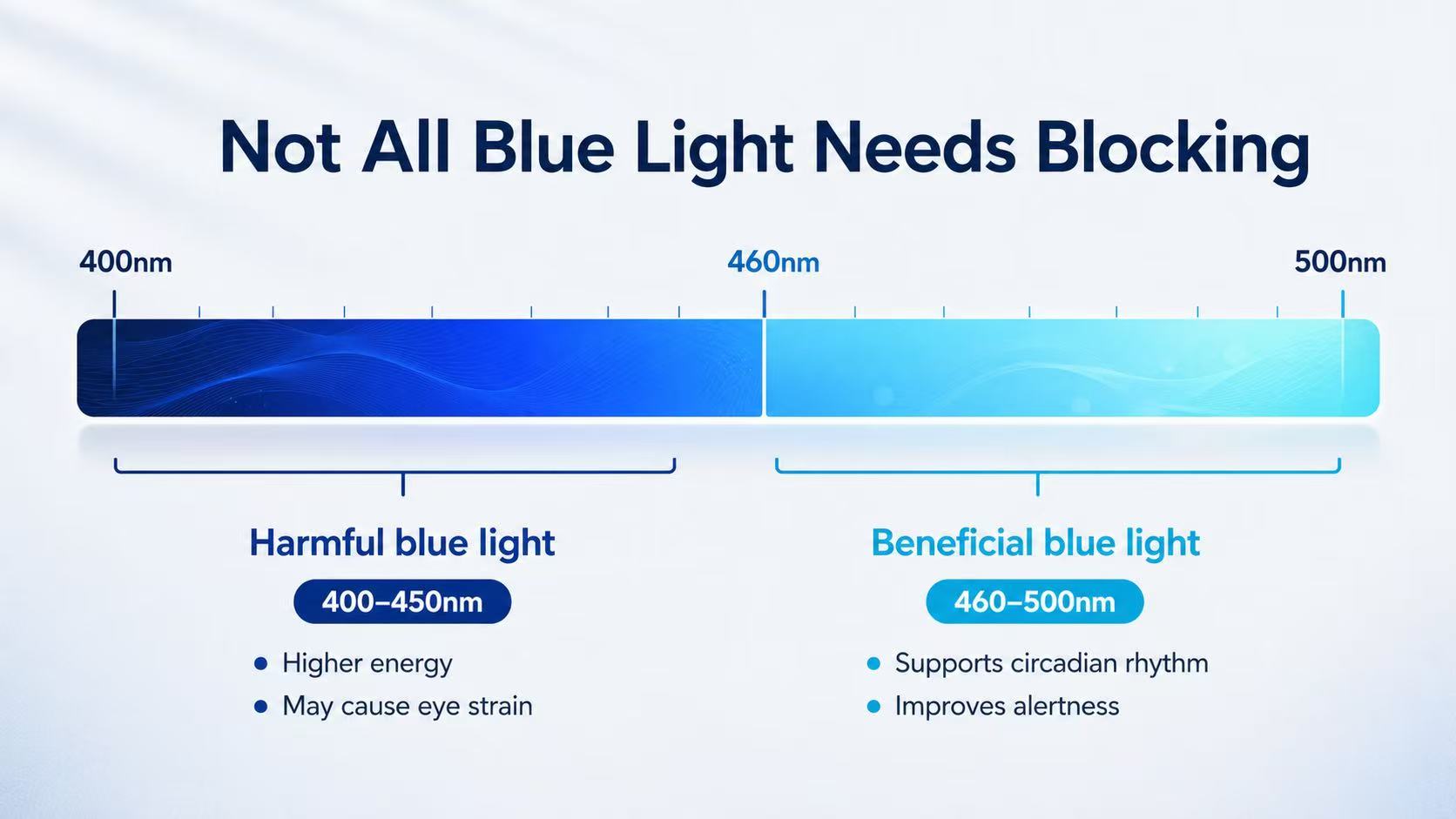
Blue light is a part of the visible spectrum, with wavelengths between 400–500nm. But here’s an important point many people don’t know: not all blue light needs to be blocked.
- Beneficial blue light (460–500nm): helps regulate circadian rhythm and improve alertness
- Harmful blue light (400–450nm): higher energy, prolonged exposure may cause eye strain
Common sources of blue light include:
- Screens: phone, computer, tablet
- LED lighting
- Sunlight (the strongest source)
⚠️ While screens emit far less blue light than sunlight, long periods of close-up screen time can still cause eye fatigue.
Does darker lens = stronger blue light protection?
Many first-time users notice yellow or amber lens glasses and assume:
“Darker lenses must block more blue light, right?”
“Darker lenses must block more blue light, right?”
Physically, there is some truth, but it’s incomplete.
Traditional tinted lenses
- Yellow/amber lenses absorb blue light, giving a warmer appearance
- Darker lenses → absorb a wider range → reduce more blue light
✅ Yes, darker lenses usually block more blue light.
But there are important caveats:
❌ Issue 1: Dark ≠ precise protection
- Dark lenses block both harmful and beneficial blue light
- Can distort overall color perception
- Users often complain their screens or designs appear unnatural
❌ Issue 2: Visual discomfort
- Severe color shifts (critical for designers and editors)
- Prolonged use may cause fatigue
In short, dark lenses are a blunt tool, not precision protection.
Are clear blue light glasses really effective?
Many people wonder:
“Are transparent blue light glasses just a marketing gimmick?”
Answer: Not entirely—but they are not a high-strength solution either.
✔ Two Main Technologies of Blue Light Lenses Currently, most blue light lenses on the market achieve their effects through two main technologies:
1️⃣ Absorptive lenses (colored)
- Dye in the lens absorbs some blue light
- Usually yellow or amber
- Protection is visible, but alters color perception
2️⃣ Reflective lenses (transparent coating)
- Special coating reflects part of the blue light rather than absorbing it
- Lenses remain clear blue light glasses, sometimes with a slight blue tint
- Natural appearance, minimal color distortion
- Ideal for office or study use
Real-world effectiveness of clear lenses
- ✔ Can filter a portion of blue light
- ✔ Helps reduce eye strain from light screen use
- ❗ Filtering rate is generally low (~10–30%)
Conclusion: Transparent lenses are more for comfort optimization than high-intensity protection.

Lens color vs protection: what really matters
Lens darkness is not the only indicator of blue light blocking ability. A more accurate way to evaluate protection is to focus on three factors:
Blue Light Blocking Rate
- 20%–40% → light filtering (suitable for daily office use)
- 40%–80% → medium filtering (suitable for long screen sessions)
- 80%+ → strong filtering (usually for dark-colored lenses)
Wavelength Range (Key!)
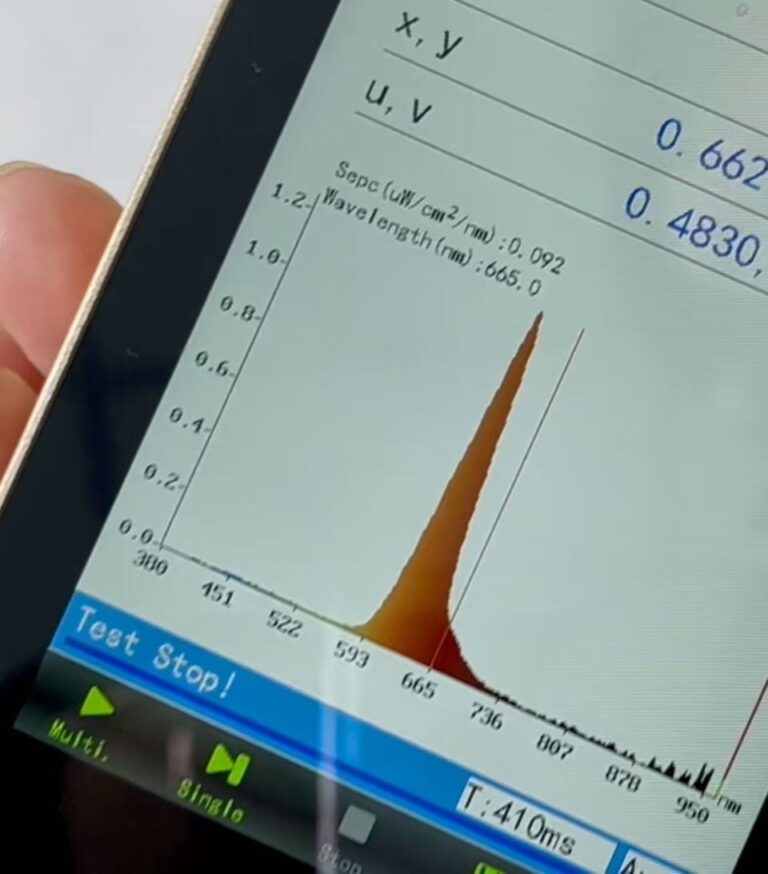
The focus is not just how much is blocked, but which wavelengths are filtered.
- Effective glasses mainly filter high-energy blue light (400–450nm)
- Some low-quality glasses may claim high blocking rates but only block irrelevant wavelengths, limiting actual effectiveness
Lens Technology
High-quality lenses often include:
- Multi-layer coatings
- Anti-reflective design
- Anti-glare optimization
These factors are generally more important than lens color when choosing blue light glasses.
How to choose for different users
Here is a practical guide based on different usage scenarios:
🎨 Designers / Photographers
- Recommendation: Avoid colored lenses
- Choice: High-quality clear blue light glasses, or none at all
📕 Light Screen Users / Students
- Recommendation: Choose light-colored lenses
- Blocking rate: 40%–60%
- Reason: Maintain color accuracy while reducing eye strain
👨💻 Office Workers / Programmers
- Recommendation: Yellow lens glasses or amber lens glasses
- Blocking rate: 60%–80%
- Reason: Reduce eye fatigue and mental fog while maintaining alertness
🎮 Gamers / Evening Screen Use
- Recommendation: Orange lens glasses
- Blocking rate: 100%
- Reason: Enhance contrast and reduce blue light exposure
😴 Poor Sleep / Insomnia
- Recommendation: Red lens glasses
- Blocking rate: High (blocks 100% of blue and green light)
- Reason: Minimize blue light’s effect on melatonin

Blue light glasses ≠ full eye protection
Many assume wearing blue light glasses equals protecting the eyes—this is a misconception.
- Eye fatigue mainly comes from poor habits, not blue light itself:
- Long periods staring at screens
- Reduced blinking → dry eyes
- Improper screen brightness or contrast
- Bad eye habits
👉 Blue light glasses are an auxiliary tool, not a complete solution. True eye protection also requires better habits and environment adjustments.
Buying guide: avoid common pitfalls
When selecting glasses, don’t just judge by lens color. Focus on:
✔ Blocking rate and wavelength: more important than color
✔ Certifications or lab reports: ensure quality
✔ Comfort: prolonged use is key
✔ Match lenses to usage: office, gaming, or night-time
Conclusion: color is cosmetic, technology is key
Back to the main question:
Do darker lenses block more blue light?
- ✔ For colored lenses, darker usually blocks more
- ❌ But darker ≠ better or more scientific
- ✔ Clear blue light glasses can still work differently
- ✔ Key factors: blocking wavelength and lens technology, not color
Takeaway:
👉 Don’t be misled by lens color—focus on science and data for truly effective eye comfort, and choose the lens type according to your specific usage scenario.