Worldwide Shipping Available — Free Shipping to UK/DE/FR/IT/ES/US

“Has anyone tried rose tinted migraine glasses?”
This post in the Reddit r/migraine community received over 50 replies in just a few days. Users shared their experiences—some called them a “life-changing tool,” others said “I can’t work without them,” while some admitted “results vary, but they definitely help.”
One highly upvoted comment read: “The first time I put them on, my eyes instantly felt relaxed, even though I didn’t realize they were tense before.”
This heated discussion is no accident. Up to 90% of migraine sufferers experience photophobia (light sensitivity), making light one of the most common yet overlooked headache triggers. With traditional medications only helping about 50% of patients cut their headache frequency in half, many are searching for non-pharmacological alternatives.
Rose tinted glasses for migraine, specifically those featuring precision-tinted lenses, have entered the public eye against this backdrop. But do these glasses really work, or is it just a placebo effect? Let’s analyze this from a scientific perspective.
The Scientific Connection Between Blue Light and Migraines
The Eyes’ “Light Receptors”
The human eye doesn’t just “see” light; it “senses” it. There are specialized cells in the retina that do not form images but are solely responsible for detecting the presence of light, sending signals to the brain regions that manage our circadian rhythm, pupillary response, and pain perception.
This specific range is widely recognized as the “pain zone” for migraine sufferers. When light in this band is too intense, it activates the brain’s “pain switch”—the trigeminal nerve system—which is the key pathway for migraine attacks.
Research confirms that photophobia in migraine patients isn’t a “psychological effect,” but rather the brain genuinely processing physiological pain signals. This also explains why light sensitivity is often accompanied by feelings of irritability and anxiety.
From Eye Strain to Migraines
Blue light has a specific characteristic: it has a short wavelength and high energy, making it highly prone to scattering in the air. This reduces screen contrast, forcing the eyes to constantly adjust their focus to see clearly. This continuous accommodative burden gradually develops into digital eye strain.
As one data scientist shared online: “Staring at a screen for over 10 hours a day, my eyes would get sore and my temples would tighten by the afternoon, followed by a headache. It wasn’t until I tried specialized glasses that I realized light was the hidden trigger I had been ignoring.”
This progression from eye strain to a headache is medically known as accommodative asthenopia. Simply put, the ciliary muscles in the eyes remain tense for so long that they become exhausted, and the pain signals travel along the nerves to the forehead and temples, triggering a headache.
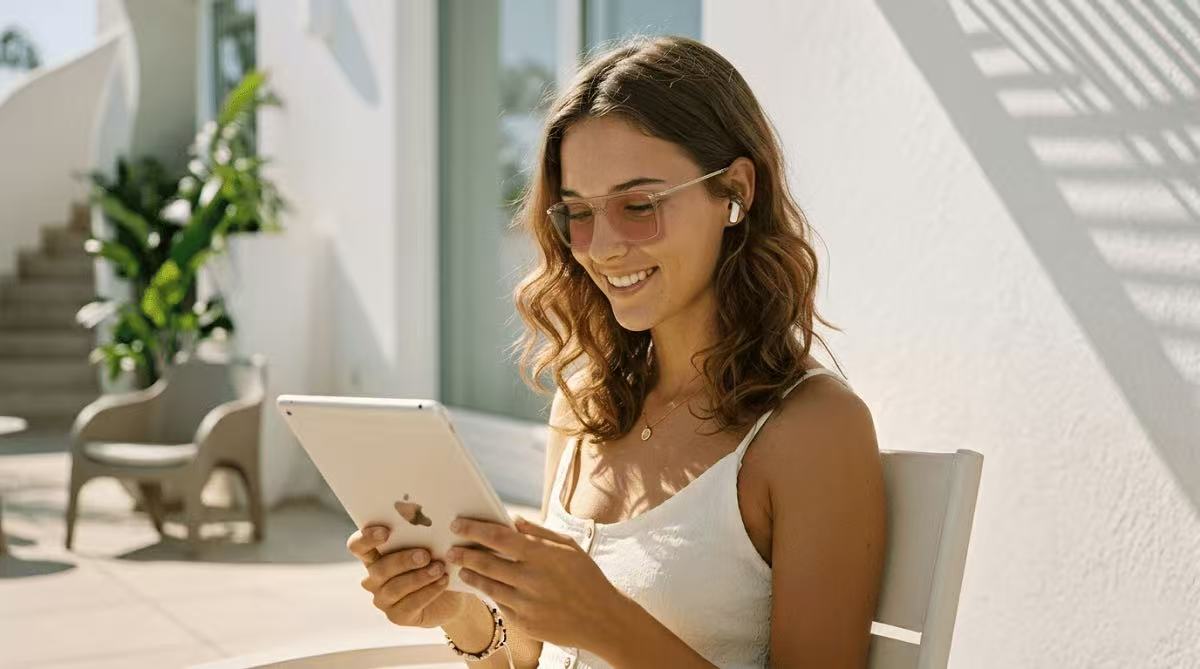
Since blue-green light is the key band that triggers migraines, filtering this specific light is a logical solution. This is the fundamental design intention behind migraine glasses.
But a question remains: with so many blue light blocking glasses already on the market, why do we need specialized migraine glasses? The answer lies in the targeted wavelengths.
Standard lenses primarily filter the 400-450nm high-energy blue light to protect the retina, but they cannot effectively block the 480-520nm band that specifically triggers migraines. Precision-tinted migraine glasses are designed exactly for this purpose.
How to Choose Effective Migraine Glasses
Lighting environments vary drastically, so the ideal migraine glasses should be optimized for different scenarios.
Indoor Scenarios
Indoor environments mainly involve computer monitors, smartphone screens, and office fluorescent lights. The blue light intensity from these sources is relatively moderate, but the exposure time is long. A lighter-tinted lens is suitable here, effectively filtering harmful light without affecting daily work and life.
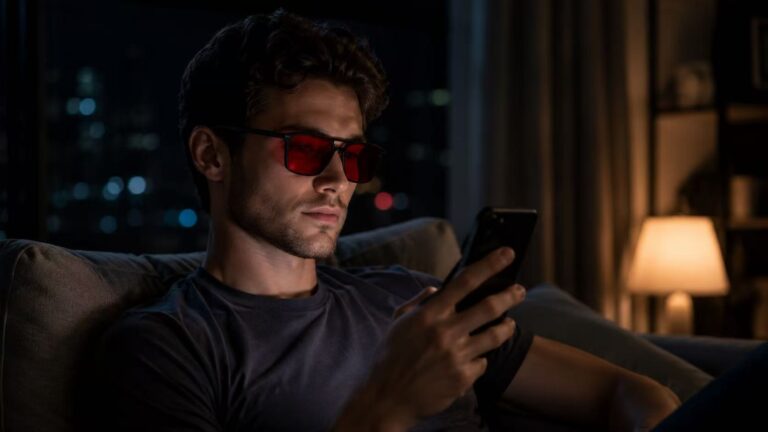
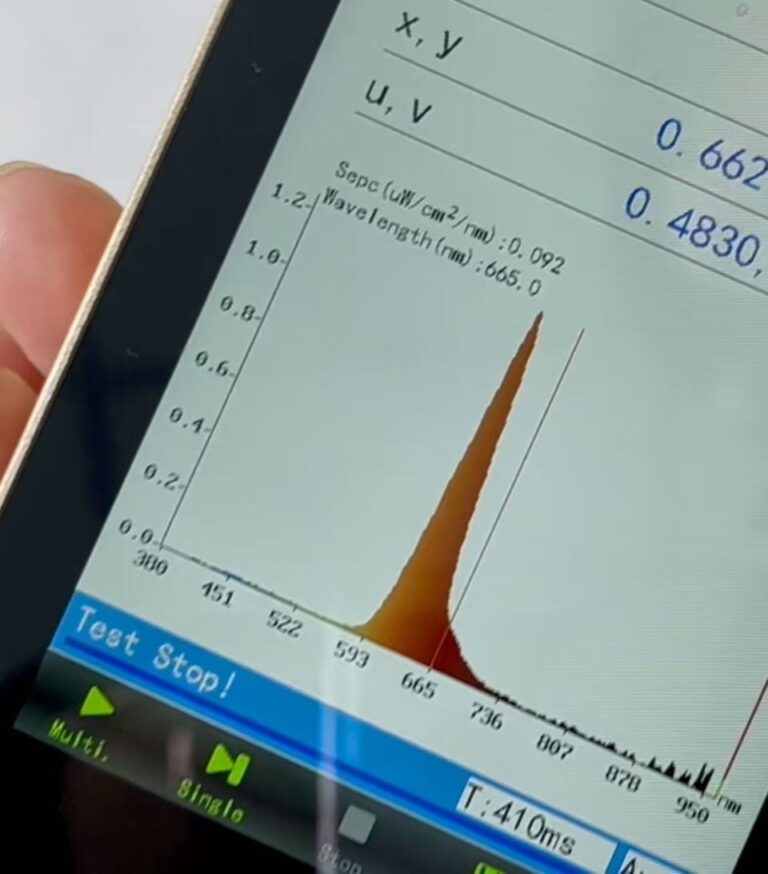
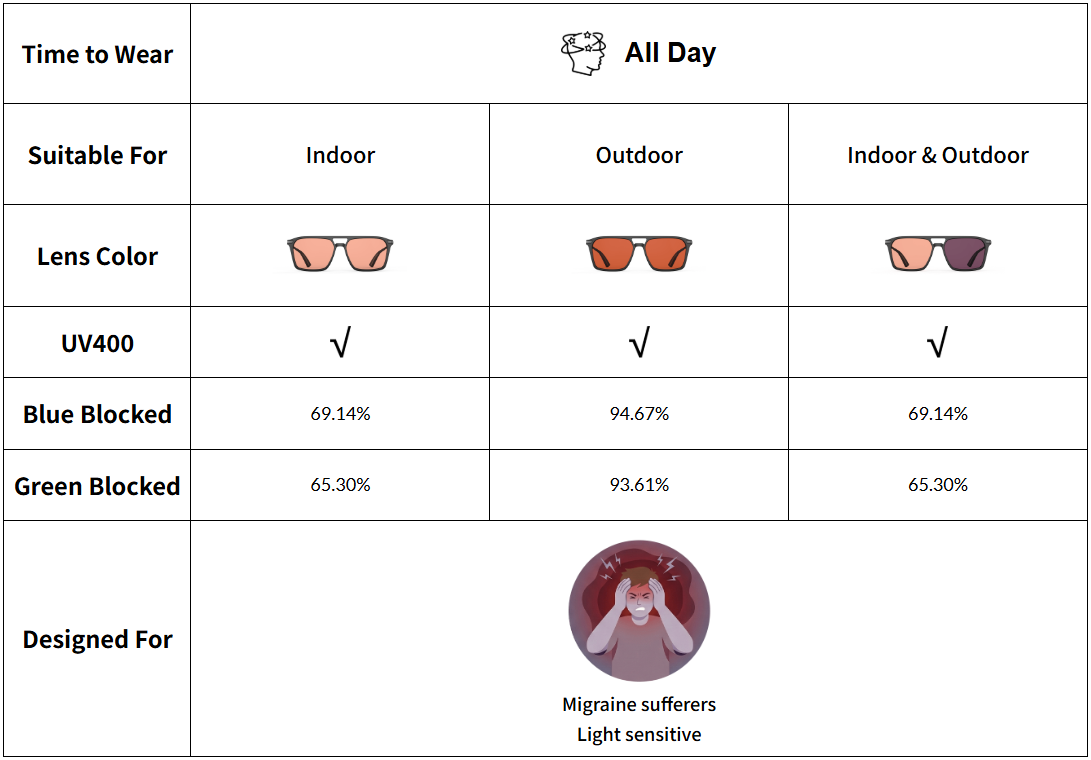
Goiteia FL-Rose tinted migraine glasses is the ideal choice designed for indoor settings. This rose-tinted lens effectively filters 71.76% of the migraine-triggering 480-520nm blue-green light emitted by screens and fluorescent lights, while maintaining a true and natural color perception. The lightweight TR90 frame and premium metal temples offer all-day comfort, while the spring hinge design ensures a fit for all face shapes.
Outdoor Scenarios
Outdoor environments present an entirely different challenge. The intensity of blue light in sunlight is dozens of times higher than indoor lighting. Coupled with ground reflection and water glare, it poses a much greater threat to light-sensitive individuals, requiring lenses with a deeper tint and stronger filtering capabilities.
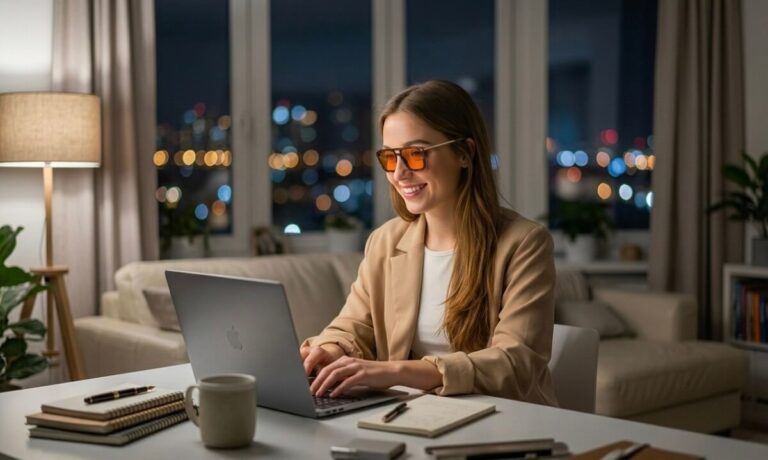
Goiteia FL-Amber tinted migraine glasses are built specifically for bright outdoor environments. They block approximately 97% of the 480-520nm blue-green light and 100% of UV rays, providing the ultimate shield for the eyes.
To achieve this maximum level of protection, the FL-Amber lenses sacrifice some color accuracy. However, unlike standard dark sunglasses, they maintain a warm contrast, ensuring your field of vision doesn’t become excessively dark while safely protecting highly sensitive eyes. The lightweight TR90 frames and premium metal temples balance durability with style.
Photochromic Lenses: A Convenient All-in-One Solution
For users who frequently switch between indoors and outdoors, carrying two pairs of glasses might be inconvenient. Goiteia Photochromic Migraine Glasses offer an elegant solution.
Using smart photochromic technology, the lenses maintain a 25% light tint indoors to effectively relieve discomfort from fluorescent lights and digital screens. Under outdoor sunlight, they automatically darken up to 83%, providing protection comparable to dark sunglasses.
Note that because car windshields naturally block UV rays, these lenses will not darken significantly inside a vehicle.
Conclusion and Recommendations
The link between blue light and migraines is backed by growing scientific evidence. From the non-visual pathways of retinal ganglion cells to tension headaches caused by digital eye strain, and the invisible impact of fluorescent light flicker, light indeed plays a major role in many people’s migraines.
Migraine glasses—especially those with precisely engineered rose tinted migraine glasses—have proven to effectively relieve photophobia and reduce the frequency and intensity of migraine attacks.
However, glasses are not the only solution. We recommend combining them with the following lifestyle practices for optimal results:
- The 20-20-20 Rule: For every 20 minutes of screen work, look at an object 20 feet (about 6 meters) away for 20 seconds to let your eyes rest.
- Screen Optimization: Lower screen brightness and enable night mode or warm color settings on your devices.
- Ambient Light Management: Avoid using highly bright screens in dark rooms; use soft ambient lighting to reduce harsh contrast.
- Healthy Routine: Maintaining adequate sleep, a regular diet, and moderate exercise are crucial foundations for migraine management.
If you suspect light is a trigger for your headaches, consider trying a pair of rose tinted migraine glasses. After all, compared to the continuous torment of migraines, a small change might just bring unexpected relief.
View Scientific Sources
Digre, K. B., & Brennan, K. C. (2012). Shedding light on photophobia. Journal of Neuro-Ophthalmology, 32(1), 68–81. https://doi.org/10.1097/WNO.0b013e3182474548
Mitsikostas, D. D., & Rapoport, A. M. (2015). New players in the preventive treatment of migraine. BMC Medicine, 13, 279. https://doi.org/10.1186/s12916-015-0522-1
Berson, D. M., Dunn, F. A., & Takao, M. (2002). Phototransduction by retinal ganglion cells that set the circadian clock. Science, 295(5557), 1070–1073. https://doi.org/10.1126/science.1067262
Rosenfield, M. (2011). Computer vision syndrome: A review of ocular causes and potential treatments. Ophthalmic and Physiological Optics, 31(5), 502–515. https://doi.org/10.1111/j.1475-1313.2011.00834.x