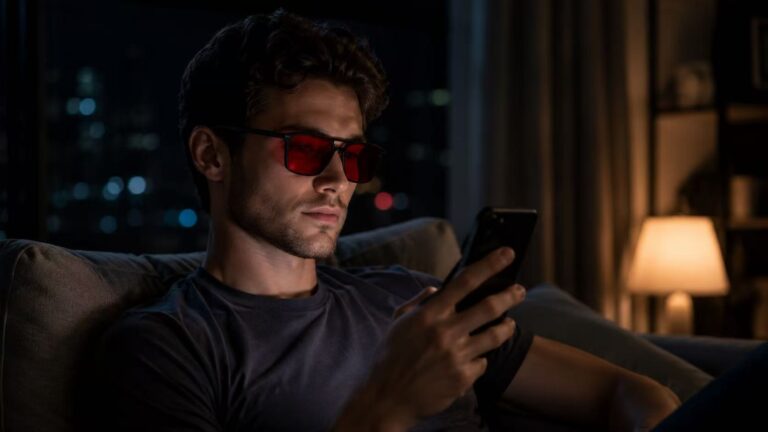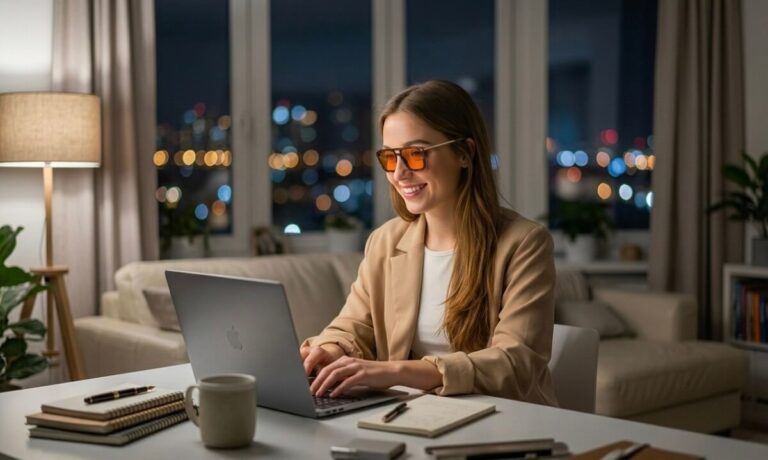
Worldwide Shipping Available — Free Shipping to UK/DE/FR/IT/ES/US

Many people believe blue light glasses are just a gimmick.
The reason is simple: a lot of products you buy simply don’t work. There are plenty of transparent or clear blue light glasses on the market claiming to block blue light, but they often only filter out irrelevant wavelengths.
Do blue light glasses actually work? Don’t rely on advertisements; look at the spectrometer test data.
Goiteia tested four colors of blue light blocking lenses. The data directly reveals the truth: they do work, but only if you choose the right color for your specific scenario.
The Testing Logic: Phone Screens vs. Lens Shielding
To get the most authentic conclusions, our testing was divided into two steps. This wasn’t a simulation in an idealized laboratory environment, but a test against the smartphone screens you face every single day.
Step 1: Measuring the original blue and green light from a phone
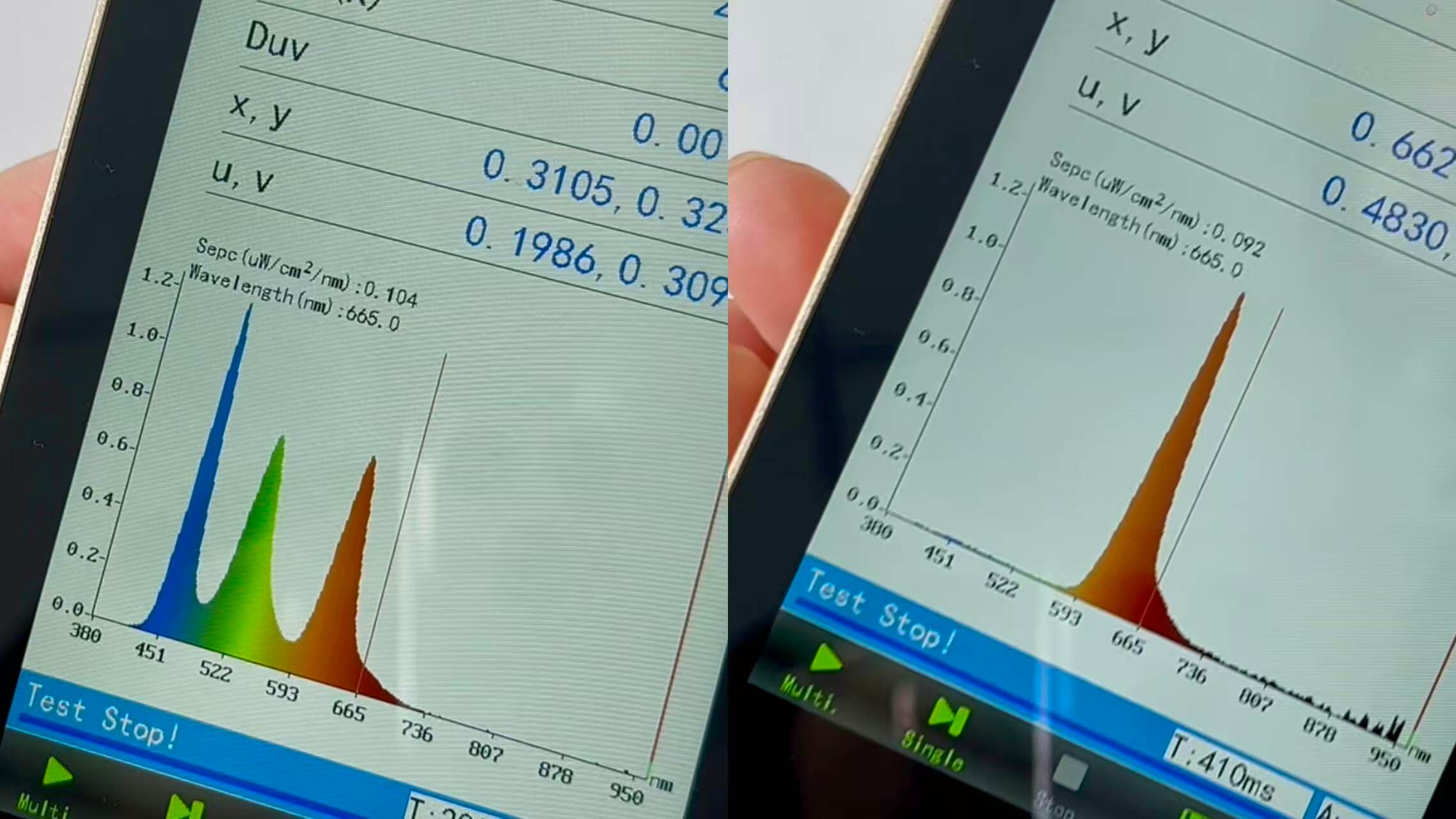
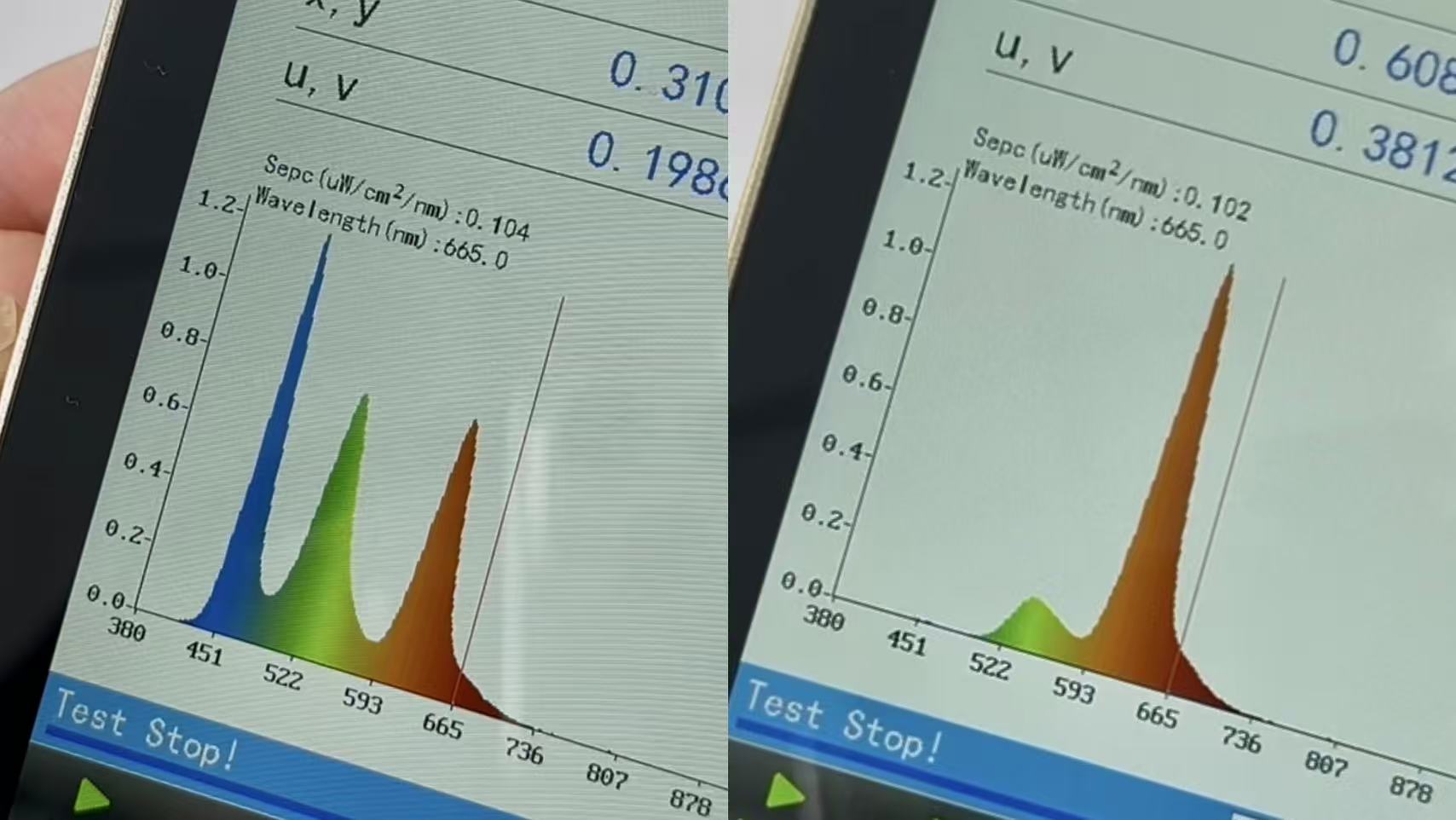
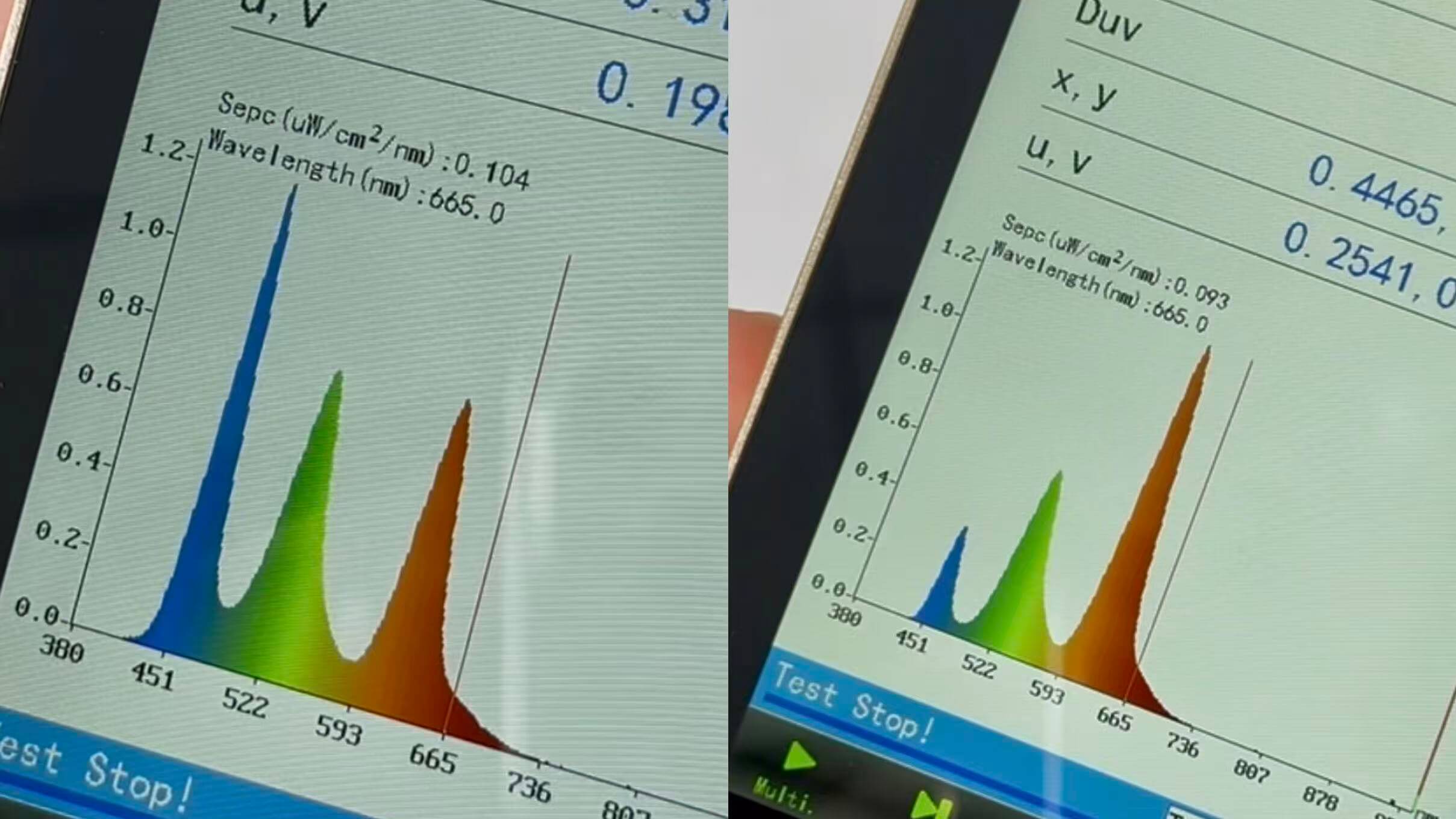
First, we aimed the spectrometer’s detector at a smartphone screen set to high brightness. The spectrometer showed dense energy peaks precisely concentrated between 400nm and 550nm. This proves that phone screens are major emitters of high-energy blue and green light.
Step 2: Testing again through Goiteia lenses
We placed Goiteia lenses between the phone screen and the spectrometer detector. The light had to pass through the lens to reach the detector. The spectrometer recorded the resulting energy changes.
Why did we focus on the 400nm to 550nm range?
This is based on clear biological evidence, not marketing jargon:
- 400nm to 500nm (High-Energy Short-Wave Blue Light): Computers and phone screens emit massive amounts of this wavelength. When your eyes are exposed to it for long periods, it causes retinal stress, leading to dryness, soreness, and severe visual fatigue.
- 500nm to 550nm (Green Light): This is the “insomnia wavelength” that many people ignore. When the retina is exposed to this light at night, it sends the wrong signals to the brain, forcibly suppressing the secretion of melatonin and disrupting your circadian rhythm. Once melatonin decreases, it becomes very difficult to feel sleepy.
The less light the spectrometer records, the higher the blocking rate, and the stronger the protection.
High-Intensity Blocking (Red, Orange)
If you suffer from insomnia or must use your phone and computer two hours before bed, you need effective sleeping glasses. Let’s look directly at this set of data.
Goiteia Red Lens Glasses Test Data:
- Blue Light Blocking Rate: ~100%
- Green Light Blocking Rate: ~100%
- Spectrogram Performance: In the 400nm to 550nm range, the transmittance curve practically hugs the zero mark.
Red lenses cut off all light signals that stimulate the brain to stay awake. When you wear Goiteia Red Lens Glasses, your eyes receive absolutely no blue or green light. Your brain immediately receives the physical signal that “it is completely dark outside,” allowing it to secrete melatonin normally.
Suitable For:
- People with severe insomnia.
- People with severe photophobia who find normal indoor lighting glaring.
- Shift workers who need to adjust their biological clocks and simulate a dark environment during the day.
Goiteia Orange Lens Glasses Test Data:
- Blue Light Blocking Rate: 100%
- Green Light Blocking Rate: ~84%
- Spectrogram Performance: Transmittance remains extremely low before 500nm and gradually rises between 500nm and 550nm.
The blocking power of Goiteia Orange Lens Glasses is second only to red. They also block all blue light but retain a small amount of green light.
This allows the orange lenses to provide robust sleep assistance while offering better color recognition than red lenses. You can clearly read the text on your phone screen while protecting your eyes from harsh light.
Suitable For:
- Light sleepers who wake up easily in the middle of the night.
- People who habitually scroll on their phones, binge-watch shows, or play games before bed.
Daily Balance (Amber)
Red and orange lenses have the highest blocking rates, but they heavily darken and redden your vision. If you wear red or orange glasses during the day, your brain will feel drowsy due to a lack of sufficient light signals, leaving you sluggish all day.
During work and study hours during the day, you need to retain some beneficial blue light to stay awake. Therefore, you need a pair of glasses that can be worn continuously throughout the day—protecting your eyes without affecting your mental state.
Goiteia Amber Lens Glasses Test Data:
- Blue Light Blocking Rate: ~82%
- Green Light Blocking Rate: ~45%
- Spectrogram Performance: The curve rises gently after 450nm, retaining a relatively high overall light transmittance.
Goiteia amber lens glasses filter out the high-frequency blue light that most easily causes eye soreness. When wearing them, you can clearly see all the details and color changes on the screen while retaining the essential light signals needed to keep your biological clock awake.
Suitable For:
- Heavy screen users (programmers, writers, etc.).
- People who frequently experience dry, sore eyes but need to maintain high-intensity work focus during the day.
Migraine Specific (Rose)
Many migraine sufferers experience attacks triggered by screens, LED lighting, and outdoor glare. Goiteia rose tinted migraine glasses are specifically designed for this exact demographic.
Goiteia FL-Rose Lens Glasses Test Data:
- Blue Light Blocking Rate: ~69%
- Green Light Blocking Rate: ~65%
- Spectrogram Performance: The curve is flat, focusing on intercepting the 480nm-520nm band.
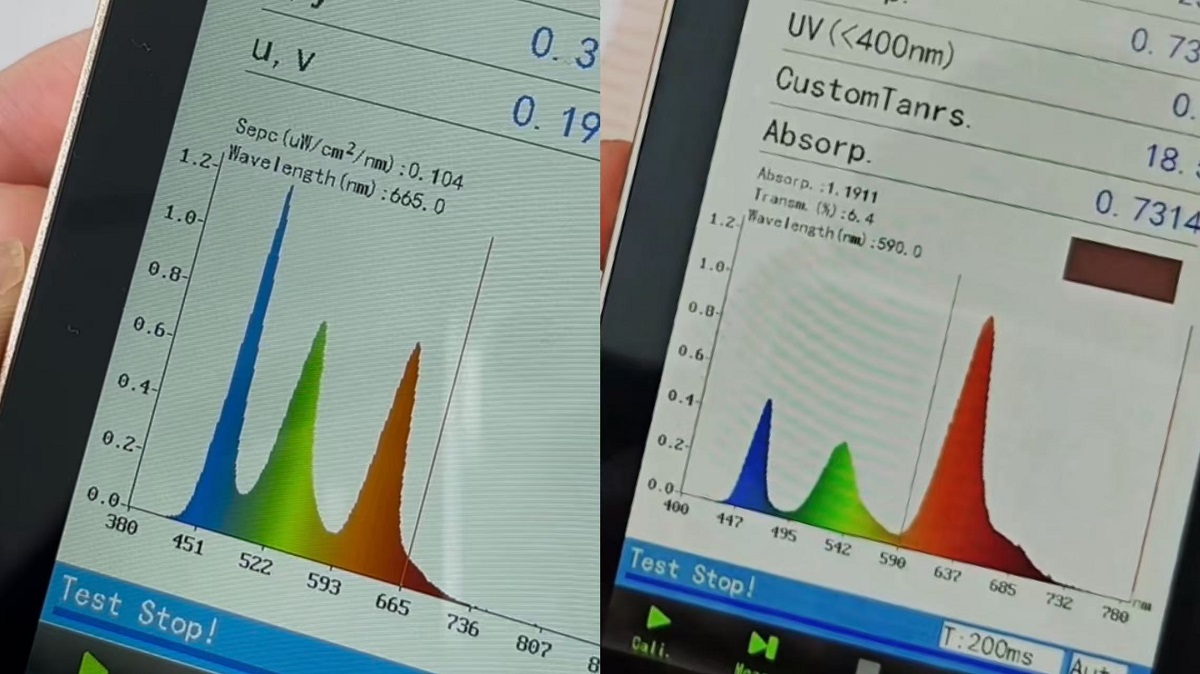
Goiteia rose tinted migraine glasses filter out approximately 71% of the blue and green light in the 480~520nm range that is known to trigger headaches. If you find screens or overhead fluorescent lights glaring, or if you have general light sensitivity, rose lens glasses can soften these lights and relieve the visual stress caused by ambient lighting.
Look at this gentle curve. There are no steep drop-offs; the data proves its mild nature.
Suitable For:
- Light-sensitive individuals: People who are highly sensitive to changes in light intensity.
- Migraine sufferers: Provides relief from migraines triggered by indoor fluorescent and LED lights.
Final Conclusions Based on Data
Don’t choose a color based on a feeling. Color simply represents the physical result of a lens absorbing specific wavelengths of light.
Goiteia offers these four colors of blue light glasses to precisely solve your specific needs in different scenarios. Please make your choice based on the following criteria:
- Long hours of daytime screen use, dry eyes: Choose amber lens glasses.
- Improving sleep, completely blocking screen light: Choose red lens glasses or orange lens glasses.
- Light-sensitive migraine sufferers needing mild relief: Choose rose lens glasses.
Spectrometer data does not lie. It is your strongest purchasing basis. First, identify your usage scenario, then look at the data to choose the color, and finally select the frame style based on your wearing habits.