Free UK/DE/FR/IT/ES/US Shipping, Other Countries (Free on Orders Over £50) SHOP NOW

We are living in a world surrounded by screens. Statistics show that modern individuals spend an average of over 8 hours a day facing screens. From the first second we wake up to the very last moment before bed, our retinas rarely get a true break.
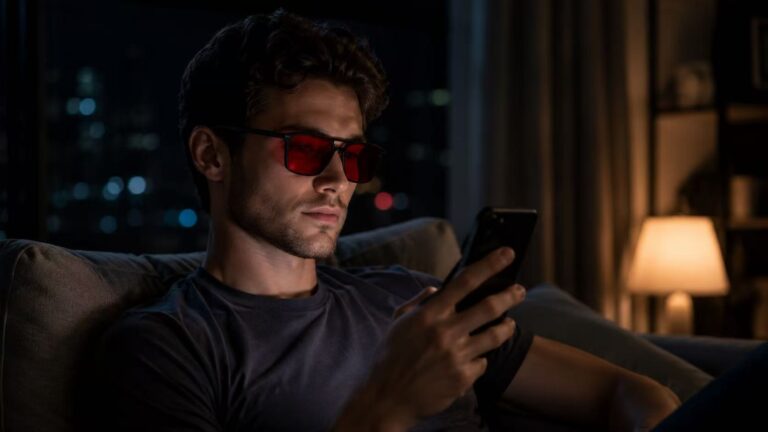
Digital Eye Strain (DES) has become a widespread issue, manifesting as dry, sore eyes and blurred vision—all of which are signals reminding us to take protective measures for our vision. Faced with various options on the market, why are orange lens glasses becoming the top choice for late-night workers?
These lenses aren’t just for aesthetics; their purpose is to provide effective protection. In environments polluted by harsh artificial light at night, they use physical means to help regulate our circadian rhythm and reduce the damage digital screens inflict on our eyes.
How to Choose Lens Colors Based on Screen Time Intensity
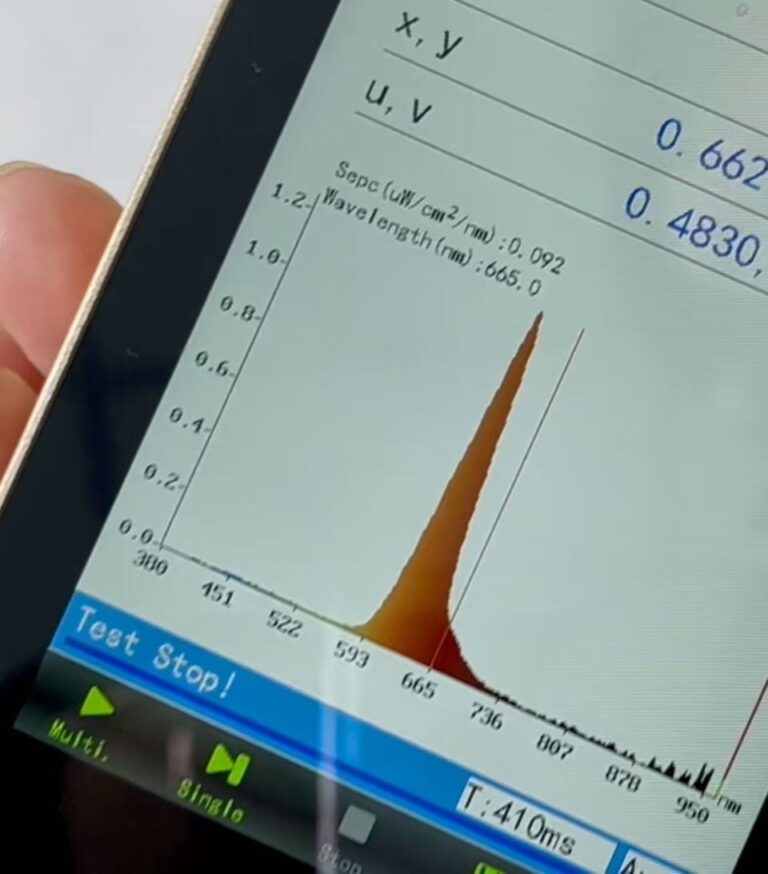
Blue light blocking is not a singular concept, but rather the science of precisely intercepting specific wavelengths of light. The visible light wavelength ranges from 380nm to 780nm, with short-wave blue light between 400nm and 500nm carrying higher energy. The most common lenses on the market are generally categorized into three types based on their blocking principles and efficiency:
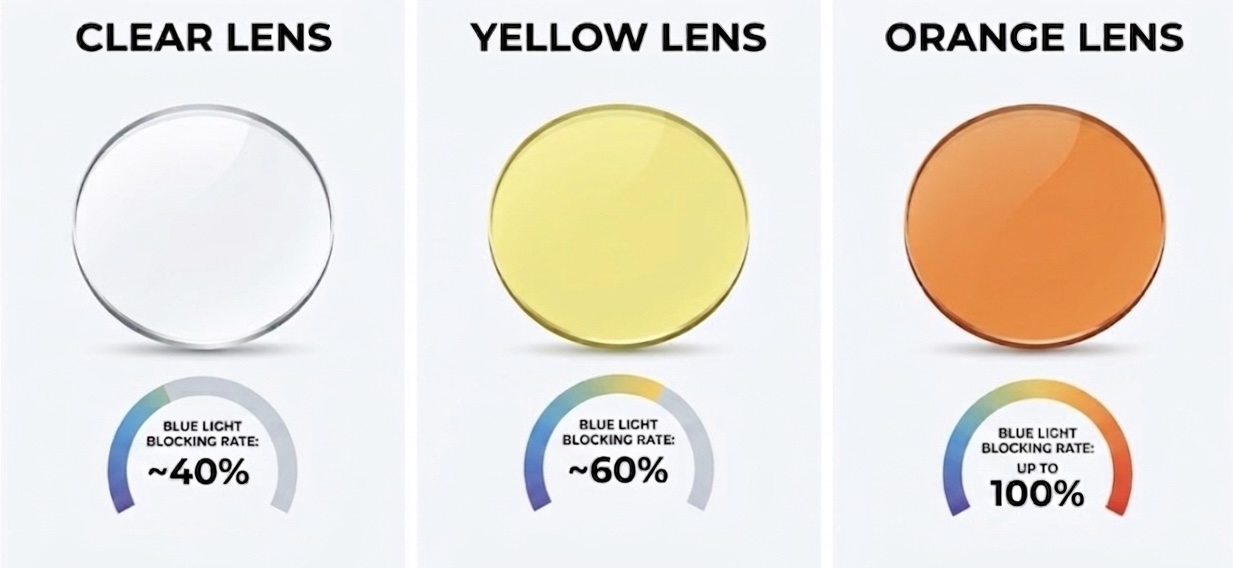
- Clear Lenses (Basic Protection): The blue light blocking rate is usually around 40%. Because of the lower blocking rate, these lenses maintain good color balance, making them suitable for environments with ample natural light and short-duration electronic device use.
- Yellow Lenses (Medium Protection): The blocking rate is approximately 60%. While filtering out high-energy harmful blue light, they retain a certain proportion of beneficial blue light to maintain brain alertness and focus. They are ideal for long hours of daytime office work.
- Orange Lenses (Maximum Protection): The blue light blocking rate can reach up to 100%. Although they sacrifice some color accuracy, they achieve a powerful block against harmful light bands. This physical filtration mechanism significantly reduces eye fatigue and muscle tension caused by prolonged screen use.
For occasional smartphone users, clear blue light glasses are generally sufficient. However, for heavy users who need to code late at night, process massive amounts of data, or stare at high-brightness screens in low-light environments for extended periods, orange lens glasses provide high-intensity physical protection, preventing eye fatigue caused by overstimulation.
The Protective Logic Behind Orange Lens Glasses
Visual Adaptation and Contrast Optimization
Many people worry that the dark tint of orange lens glasses will make it hard to see the screen. In reality, the human brain possesses a mechanism known as “Color Constancy.” About five minutes after putting on the glasses, your optic nerves will automatically calibrate the white balance. The adapted visual experience is not overwhelmingly orange, but rather a soft, high-contrast state.
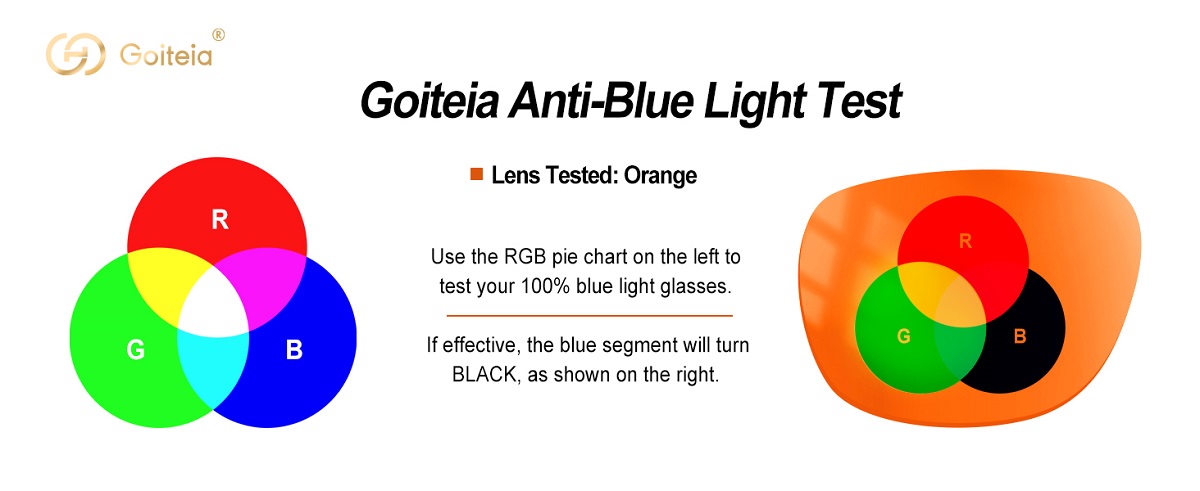
Because high-energy blue light easily scatters within the lens of the eye, prolonged screen viewing often makes the image appear washed out or glaring. By providing a 100% physical block against blue light, orange lens glasses cut off this source of scattering. Under this filtration, originally glaring blue light-emitting pixels appear closer to black. This shift makes text in Excel spreadsheets or code editors much clearer and the background cleaner, significantly lightening the visual load.
Melatonin Protection and Sleep Regulation
A core function of these glasses lies in regulating the biological clock. Photosensitive cells in the retina (ipRGCs) are highly sensitive to blue light around the 480nm wavelength, and this specific light suppresses the brain’s secretion of melatonin.
When using electronic screens late at night, blue light signals disrupt the brain’s judgment of circadian rhythms, causing melatonin levels to drop, which in turn leads to difficulty falling asleep or poor sleep quality. By physically filtering out this spectrum of light signals, orange lenses glasses assist the body in restoring its normal melatonin secretion rhythm.
This physiological intervention not only relieves eye fatigue but, more importantly, uses physical means to help rebuild sleep quality, allowing the body to smoothly transition into a resting state after sunset.
Who Needs This “Orange Line of Defense” the Most?
Not everyone needs orange blue light glasses; they are specifically designed for demographics deeply “tethered” to digital screens:
- Programmers: When coding or processing spreadsheets late at night, the high contrast between the screen background and text forces the eyes to adjust constantly. Orange lens glasses filter out high-energy short-wave blue light, softening the visual experience and reducing eye muscle tension from staring at lines of code for hours.
- People with Poor Sleep Quality or Frequent Midnight Awakenings: Nighttime blue light suppresses melatonin, tricking the brain into thinking it’s still daytime. Wearing orange lens glasses after sunset minimizes light interference with the biological clock, helping the body fall asleep faster and improving sleep stability throughout the night.
- Students Studying Late: E-books and online courses often feature high screen brightness. Using them in dimly lit environments easily leads to dry eyes and blurred vision. Orange lens glasses act as a physical barrier to alleviate eye strain.
- Gamers and Binge-Watchers: Immersive entertainment at night is often accompanied by a lowered blink rate. Wearing orange lens glasses blocks out the majority of artificial light stimulation, preventing burning eyes or over-excitement after the entertainment ends.
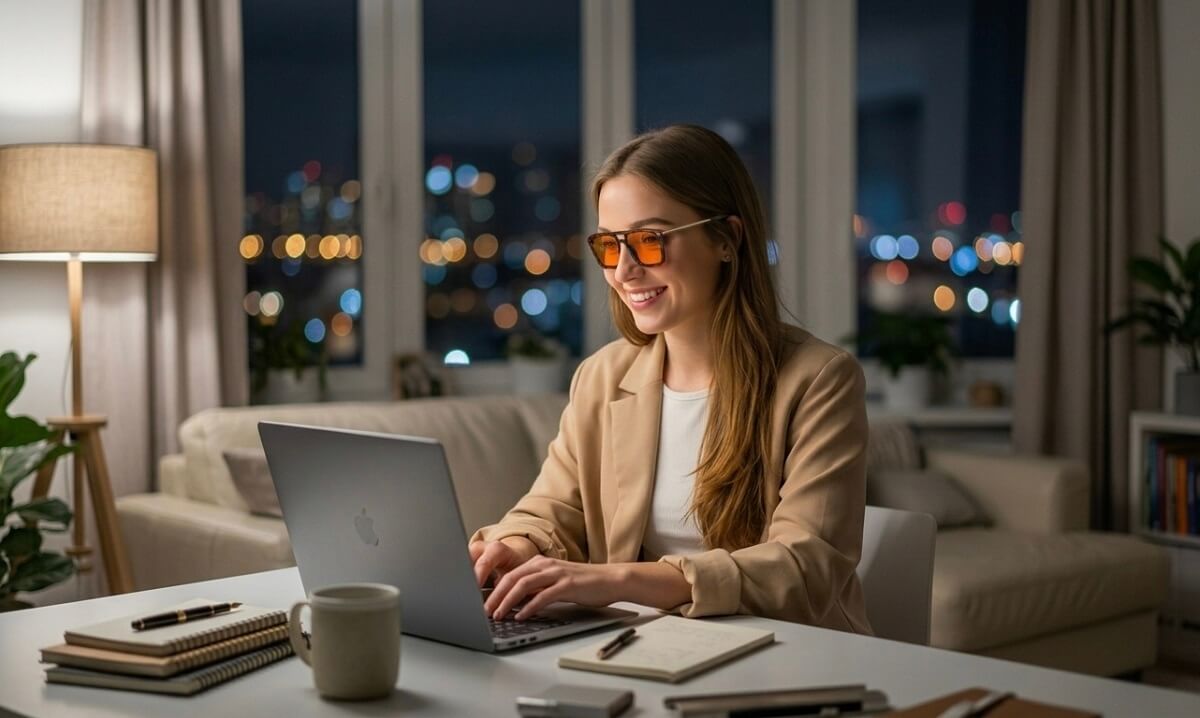
How to Maximize Protection with Orange Lens Glasses
No matter how good the hardware is, rational eye-care habits are the true key to protecting your vision. We recommend deeply integrating your glasses into your daily workflow to establish systematic protective habits:
- Follow the “20-20-20” Rule: Every 20 minutes of screen use, look at something 20 feet (6 meters) away while wearing your glasses, and actively blink 20 times. This forces corneal lubrication and relieves continuous tension in the ciliary muscles.
- Optimize Ambient Lighting: Avoid staring at screens in pitch-black rooms. Even with orange lens glasses, it is recommended to add background lighting (like a backlight) behind the screen to reduce the brightness contrast between the screen and its surroundings.
- Establish a “Sunset Switch” Routine: Proactively switch to your orange lenses starting around 6:00 PM. This is not just a physical 100% blue light block; it also sends a clear signal to your biological clock to “prepare for rest.”
Eye Health Management in the Digital Age
Protecting your eyes shouldn’t be a fleeting moment of anxiety during a medical checkup, but rather a long-term investment in prevention. By lowering screen brightness and utilizing the physical filtration of orange lens glasses, you can effectively block harmful blue light from disrupting your retinas and your sleep.
Rather than seeking medical intervention after your vision is already impaired, start now. Using this low-cost, physical tool helps you strike the perfect balance between highly efficient work and deep, restorative rest.