Worldwide Shipping Available — Free Shipping to UK/DE/FR/IT/ES/US

5:30 AM.
Convenience stores begin restocking shelves. Breakfast shops turn on their lights. The sky slowly fades from black to pale blue.
And you’ve just finished an entire night shift.
Your body feels unbearably heavy. Your brain feels waterlogged and slow. All you want is to get home and collapse into bed.
But then something strange happens.
The sun rises… and suddenly, you feel awake again.
Most night shift workers know this feeling all too well.
You’re exhausted beyond words, yet the moment morning sunlight hits your eyes, your body refuses to sleep. Some people get headaches. Others feel nauseous or restless. Some lie in bed for hours after a 12-hour shift, completely unable to fall asleep.
And the worst part?
It doesn’t necessarily mean you’re “bad at night shifts.”
In many cases, your body is simply being forced awake by morning light.
The Hardest Part of a Night Shift Isn’t 3AM
It’s 6AM.
Most people assume the hardest part of working overnight is staying awake in the middle of the night.
But for many workers, the truly brutal moment happens after the shift ends.
Because the human body runs on light.
More specifically, your circadian rhythm runs on light.
Your brain constantly uses light exposure to determine whether it’s time to feel alert or sleepy. Morning sunlight is especially powerful because it signals to the body:
“It’s daytime. Wake up.”
This affects melatonin production, alertness, body temperature, cortisol levels, and overall sleep timing.
The problem is:
For night shift workers, sunrise does not mean the beginning of the day.
It means bedtime.
That creates a strange biological conflict.
Your body is completely drained, but the morning sun is telling your brain:
“Do not sleep yet.”
Many overnight workers describe the exact same experience:
They feel exhausted before leaving work.
Then they walk outside, see the sunlight… and suddenly feel more awake than they did an hour earlier.
Then they get home and can’t sleep.
Why Are More People Wearing Night Shift Glasses?
Over the past few years, more and more people on Reddit, sleep forums, and biohacking communities have started discussing something unusual: night shift glasses.
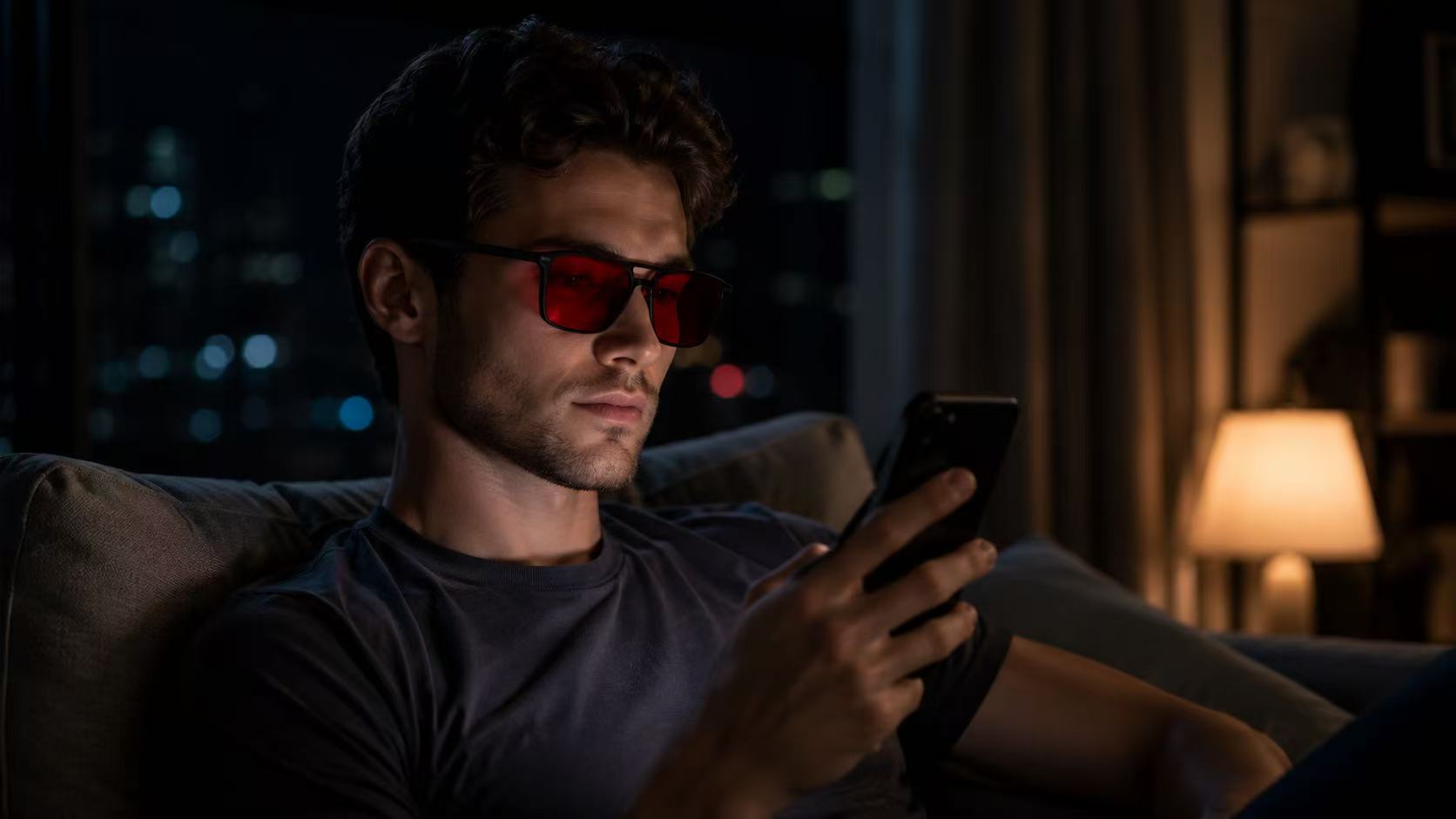
At first glance, they look a little strange.
Deep red-tinted lenses.
Like a cyberpunk movie prop.
Like something from a 70s rock concert.
But many night shift workers who try them report surprisingly similar experiences:
“I didn’t feel as awful after work.”
“The sunrise didn’t hit me as hard.”
“My body felt calmer.”
“I actually felt sleepy when I got home.”
That’s why more overnight workers are starting to wear night shift glasses after their shifts.
Not because they’re trying to “protect their eyes.”
But because they’re trying to reduce the wake-up signal created by morning light.
What Are Night Shift Glasses?
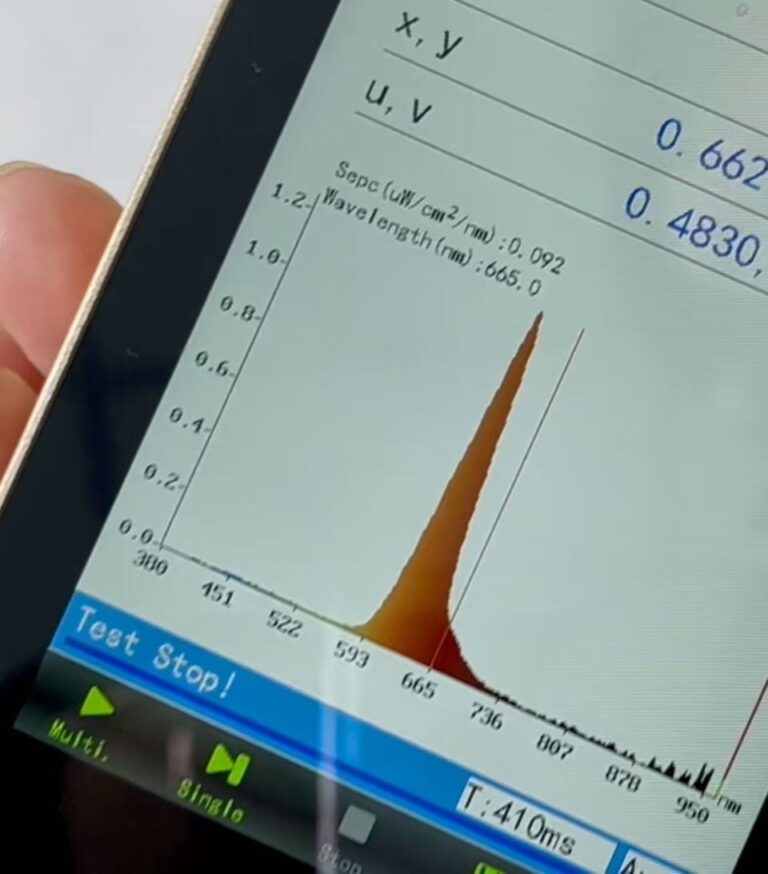
Night shift glasses are a type of blue light blocking glasses designed with deep red lenses that filter out blue and green light.
These wavelengths are especially important because they play a major role in regulating the body’s Circadian Rhythm.
Common sources include:
-
Sunlight
-
LED lighting
-
Phone screens
-
Computer monitors
-
Bright indoor lighting
These modern light sources continuously signal to the brain:
“Stay awake.”
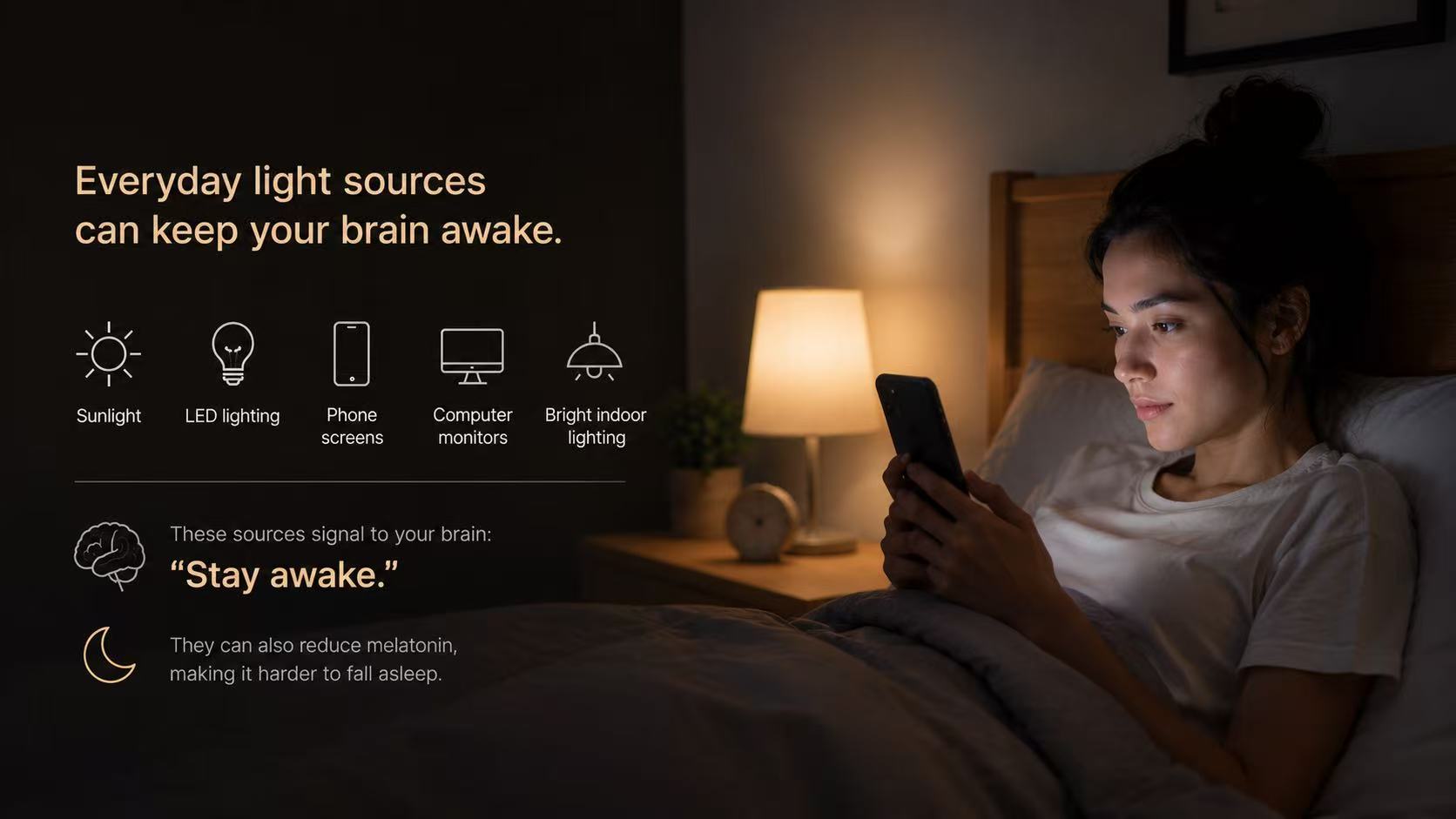
Blue and green light are also strongly associated with melatonin suppression, which can make it harder for the body to naturally prepare for sleep.
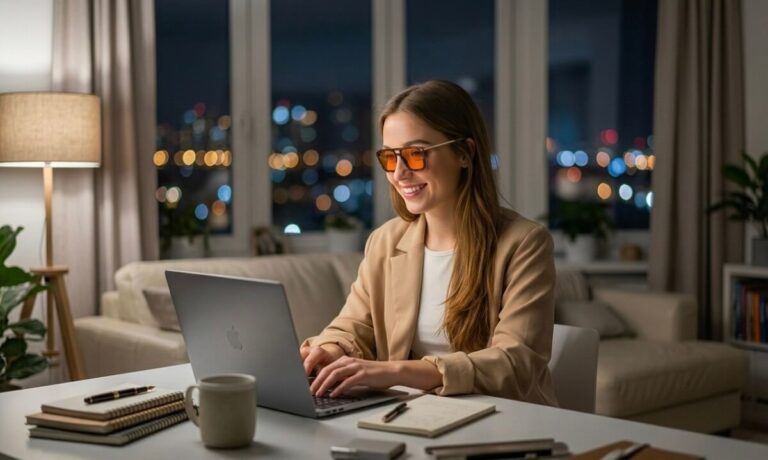
By filtering out these stimulating wavelengths, night shift glasses help create a darker, lower-stimulation visual environment, even during sunrise or screen exposure.
That’s why many users describe the experience not as sudden sleepiness, but as:
“Everything feels quieter.”
Their mind feels quieter.
The constant tension behind the eyes begins to fade.
Slowly, the body starts recognizing that it’s finally time to rest.
The constant tension behind the eyes begins to fade.
Slowly, the body starts recognizing that it’s finally time to rest.
Many people describe it as:
“My body finally realized it was nighttime.”
Why Night Shift Workers Notice the Difference More
Night shift workers experience a much stronger disruption to their Circadian Rhythm than the average person.
For most people, nighttime blue light exposure might simply mean:
“Falling asleep a little later.”
But for overnight workers, the entire sleep-wake cycle gets pulled in the opposite direction.
Morning sunlight becomes especially disruptive.
That low-angle sunrise light is incredibly effective at stimulating wakefulness.
As a result, many night shift workers begin building a post-work “wind-down ritual”:
-
Wearing night shift glasses before sunrise
-
Using blackout curtains
-
Switching to warm lighting
-
Avoiding stimulating content
-
Keeping their environment dim and quiet
In other words:
They are trying to artificially create nighttime.
Because modern lighting was never designed for people who sleep during the day.
Are Night Shift Glasses Just Placebo?
This is probably the biggest debate surrounding night shift glasses.
Some people believe the benefits are exaggerated.
Others argue the real issue isn’t blue light at all, but:
-
Stress
-
Overwork
-
Screen addiction
-
Irregular sleep schedules
-
Mental overstimulation
And honestly, those arguments are not entirely wrong.
Sleep is complicated.
No single product can magically “fix” it.
But what’s interesting is that even in highly skeptical discussions online, many night shift workers still say the same thing:
“I don’t know if it’s placebo… but I genuinely feel better.”
And their experiences are often surprisingly specific:
-
Falling asleep faster
-
Fewer nighttime awakenings
-
Less nausea after shifts
-
Feeling more rested upon waking
For many long-term night workers, that improvement alone matters.
Because they aren’t chasing “perfect sleep.”
They just want life to feel less brutal.
Modern Humans Barely Experience Real Nighttime Anymore
Maybe the real issue isn’t just blue light.
Maybe it’s the fact that modern humans no longer experience true darkness.
For most of human history, nighttime meant:
-
Firelight
-
Moonlight
-
Dim environments
-
Slower stimulation
Today, nighttime looks almost identical to daytime.
Phones.
LED lights.
Advertisements.
24-hour stores.
Streaming platforms.
Office buildings glowing at 2AM.
The modern world constantly tells the brain:
“Stay alert.”
And for night shift workers, that problem becomes even more extreme.
Eventually, many people realize they don’t actually need more stimulation.
They need a signal that tells the body:
“You’re allowed to rest now.”
Why Goiteia Designed Night Shift Glasses
Goiteia designed its night shift glasses as a tool to help support the body’s natural nighttime transition in a world filled with artificial light.
Modern nights are overloaded with blue and green light from screens, LEDs, and indoor lighting. These wavelengths can interfere with melatonin production and continuously stimulate the brain long after the body is already exhausted.
Goiteia night shift glasses use deep red-tinted lenses designed to block 100% of blue and green light within the melatonin-suppression range, helping reduce visual overstimulation and support a healthier nighttime environment.
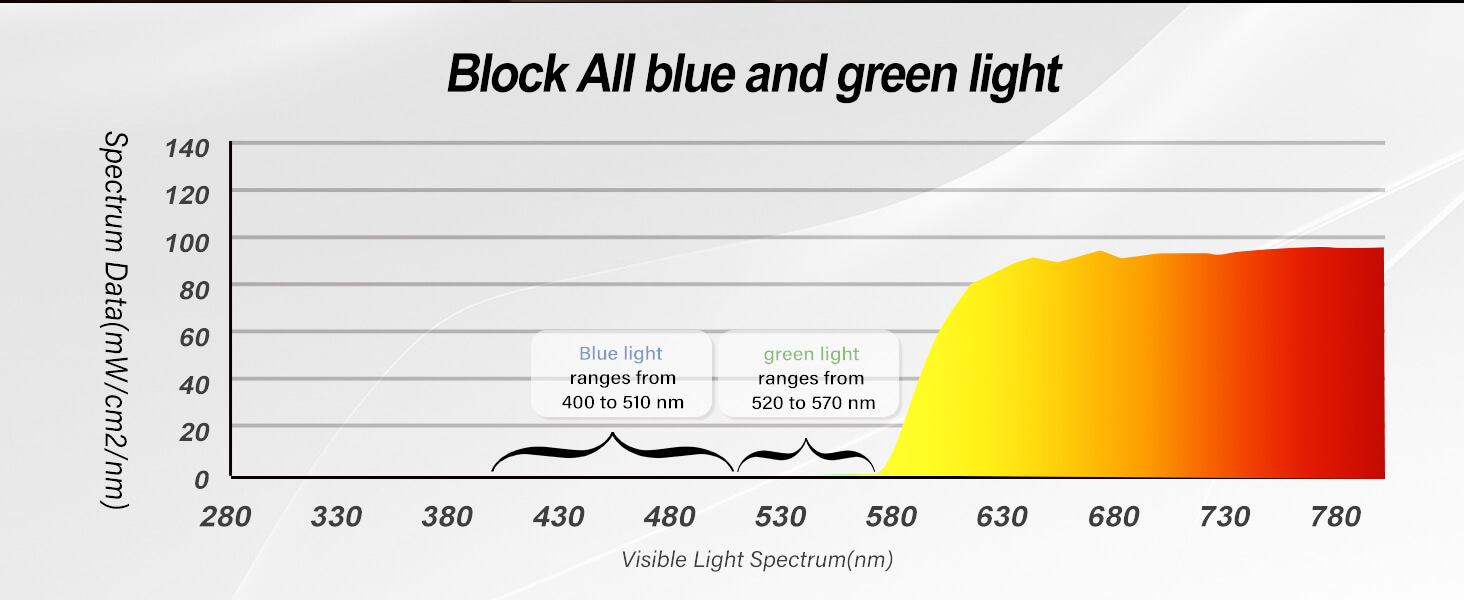
By reducing exposure to these stimulating wavelengths, the body can begin producing melatonin more naturally and gradually shift from a state of alertness into rest.
Many users describe the feeling not as an instant wave of sleepiness, but as a subtle transition:
-
Their mind feels quieter
-
Their eyes feel less strained
-
The “wired but tired” feeling starts fading
As if the body is finally being told:
“It’s nighttime now.”
At the same time, Goiteia night shift glasses are designed for long-term comfort, using lightweight TR90 materials, flexible spring hinges, and a fit intended for extended evening wear.
Whether used:
-
After a night shift
-
Before bed
-
During late-night screen time
-
While winding down after work
-
Or during long hours under artificial light
The goal is not to force sleep.
It’s to help create an environment where the body can naturally begin slowing down again.
For many night shift workers, that gentle transition is exactly what they’ve been missing.