Free UK/DE/FR/IT/ES/US Shipping, Other Countries (Free on Orders Over £50) SHOP NOW

Imagine you’ve just stepped out of the operating room, or perhaps you are simply born with extreme light sensitivity.
Even the softest morning light can cause a sharp stinging sensation, making it difficult to keep your eyes open and causing persistent tearing.
You reach for a pair of stylish sunglasses, yet the glare remains overwhelming, and the light leaking in from the sides only worsens the discomfort.
This isn’t a matter of lens quality—it’s because ordinary sunglasses are not specifically engineered for post-operative recovery or hypersensitive eyes. In these cases, standard eyewear simply cannot provide sufficient protection.
What you truly need is specialized eyewear designed for eye surgery patients—featuring a fully enclosed structure that offers superior light isolation and a comfortable visual experience.
This is why CAT 4 post eye surgery sunglasses are the ideal solution tailored specifically for your needs.
Why Ordinary Sunglasses Fail to Block Intense Light
Why does it still feel excruciatingly bright even when you are wearing shades? This is not your imagination. It is backed by rigorous science. Let’s tear off the disguise of ordinary sunglasses and see how light “ambushes” your fragile eyes.
The “Suppression Power” of Light Transmittance (CAT 4 vs CAT 3)
Most ordinary sunglasses on the market belong to the CAT 3 category, with a light transmittance between 8% and 18%. This is utterly incapable of blocking intense light from irritating a post-operative, recovering cornea.
A CAT 4 lens, however, violently forces the light transmittance down to an extreme limit of 3% to 8%.
If ordinary sunglasses are like pulling a sheer curtain over a window, CAT 4 post eye surgery sunglasses are like hanging heavy blackout drapes. They directly “swallow” the vast majority of the glaring light, allowing your battered photoreceptor cells to finally be “muted.”
Peripheral Light Leakage
Scattered light from your surroundings will sneak into your eyes through the open edges of a standard sunglass frame. This instantly triggers ciliary muscle spasms, ultimately leading to severe aching in the eyeballs and intense headaches for post-op patients.
Wearing ordinary sunglasses is like holding a flat-top umbrella in a heavy downpour. You think you’ve blocked the rain from above, but the water (light) blows in ruthlessly from the sides and top, soaking you to the bone.

The “Secondary Damage” of Glare on a Post-Op Retina
After procedures like cataract surgery, the artificial intraocular lens (IOL) often lacks the natural lens’s ability to filter out high-energy visible (HEV) light. This not only triggers deep eye pain but directly increases the long-term risk of macular degeneration.
Without the protection of your old lens, your retina is like a soldier without body armor—completely exposed to the crossfire of UV rays and blue light, with zero ability to fight back.
The Truth Behind Medical Research: Why Your Post-Op Eyes Need Extreme Protection
You might think I’m exaggerating. I am not. Scientific data never lies. Let’s look at the chilling, hard truths straight from the laboratories.
Heightened Post-Op Light Sensitivity
Clinical data shows that the eyes of post-cataract surgery patients are in a state of extreme fragility. A staggering 57% of patients experience severe light sensitivity and tearing in the early post-operative period. Even the weakest morning sunlight can feel like a blinding camera flash to recovering eyes.
Over one-third of patients feel noticeable eye pain, dryness, or a foreign body sensation early on. What’s more alarming is that this “needle-prick” discomfort doesn’t just vanish instantly; for about 10% of patients, this agony can last up to 6 weeks or even longer.
Elimination of Glare Interference with Polarized Filtering
A clinical case series on patients following cataract surgery revealed that even if a patient recovers excellent visual acuity (20/20), they might still suffer from glare and reduced contrast due to intraocular lens (IOL) glistenings.
The study pointed out that wearing Polarized Sunglasses with edge filter designs can significantly improve visual symptoms. Researchers even consider this a viable, non-surgical alternative to undergoing a second surgery to explant the artificial lens.
This miracle occurs because ordinary tinted lenses only crudely lower overall brightness, while professional post eye surgery sunglasses use HD Polarized technology to precisely intercept the harsh, horizontal reflective glare, restoring a high-definition, transparent, and “comfortable” visual field.
The Impact of Side Shields on UV Exposure
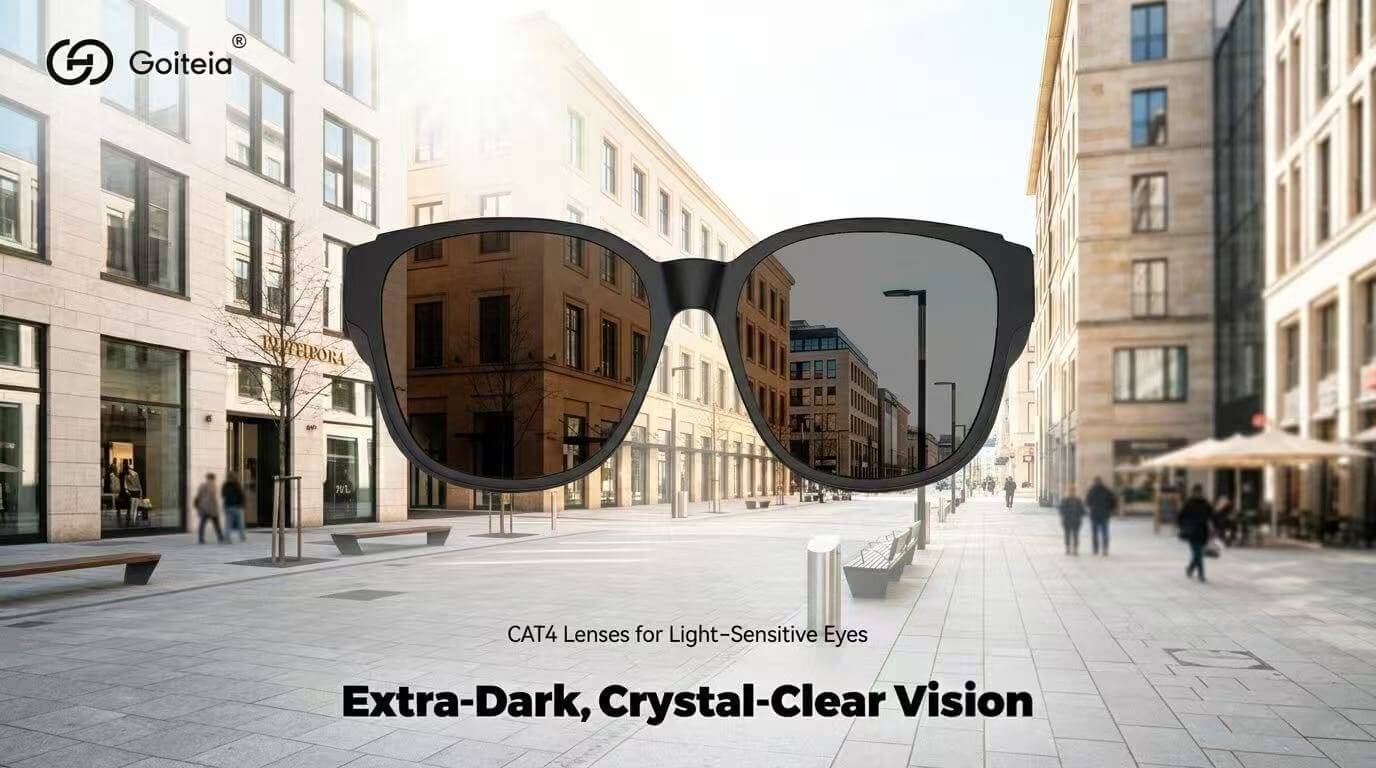
A 3D simulation experiment compared the “light leakage rate” of standard frames versus fully wrapped frames, and the results were shocking. This explains exactly why you still squint while wearing expensive designer shades: light is still drilling through the gaps at your temples and forehead.
Compared to standard frames, a wrap-around design can achieve nearly 100% extreme, omnidirectional protection. This side-shield design acts like an “enclosed balcony” for your eyes, physically blocking stray light and UV rays from every single angle. This plays a decisive role in protecting the fragile post-op cornea and preventing eye inflammation and the worsening of dry eye syndrome.
How to Scientifically Manage Post-Op Eye Sensitivity
Now that you understand the root of the pain, how do we effectively fight back? Stop tormenting yourself with inferior shades. You need tactical-grade protection.
Physically Reshape Your Indoor “Light Environment”
Don’t think you are safe just because you are indoors. For eyes in the early stages of recovery, overhead ceiling lights and kitchen spotlights are basically “mini-bombs.” You must immediately swap harsh white lights for warm yellow bulbs.
Brighter is not better. Rely on floor lamps or desk lamps that bounce light off the walls to avoid direct eye exposure. If possible, install heavy blackout curtains.
Remember: Your goal is to create a “cinema-level” soft lighting environment to give your retina room to breathe.
Choose CAT 4 Goiteia Wrap-Around Post Eye Surgery Sunglasses
Stop compromising with ordinary sunglasses that only prolong your suffering. You need the CAT 4 ultra-dark lenses specifically engineered for light sensitivity and eye surgery recovery—a “tactical-grade” eyewear designed to withstand extreme light.
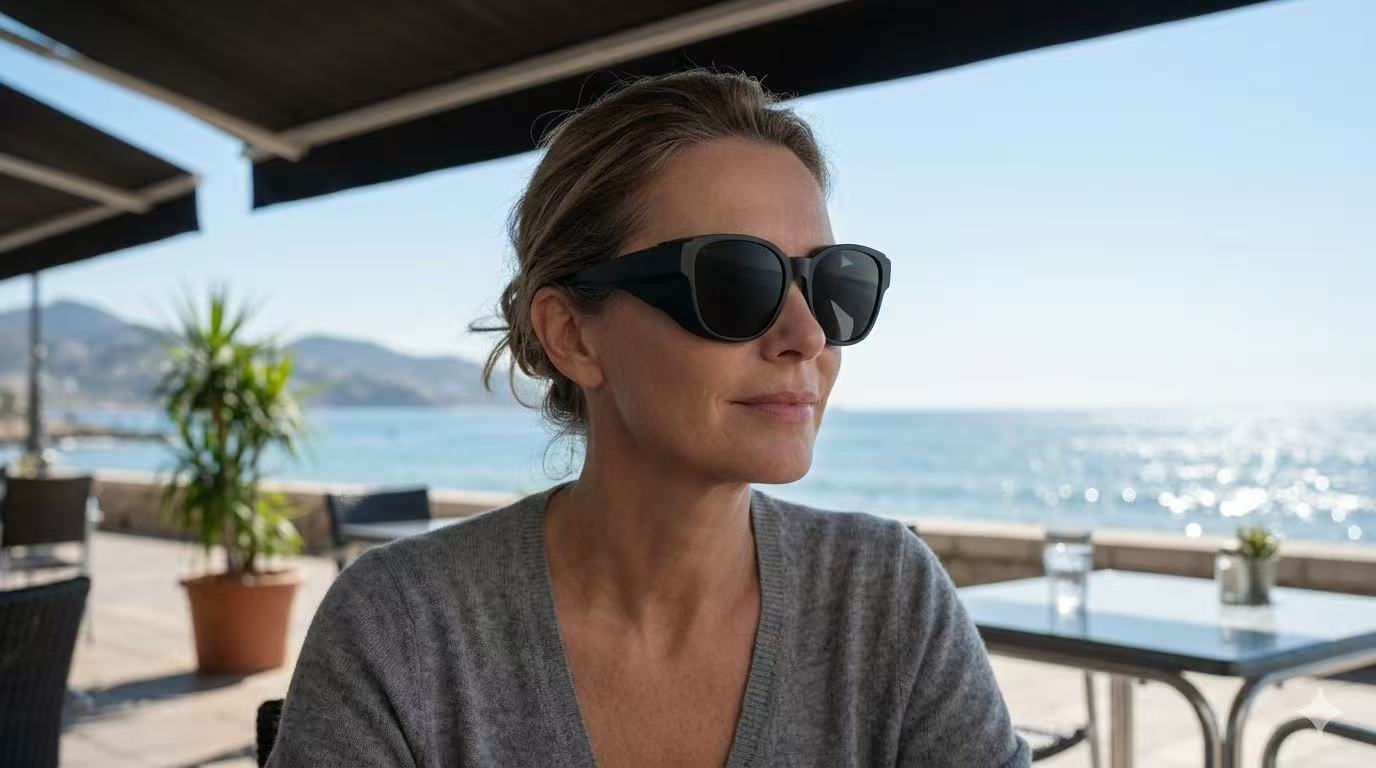
Goiteia CAT 4 post eye surgery sunglasses push this protection to the absolute limit. They feature hardcore CAT 4 shading power alongside HD Polarized technology, effectively filtering horizontal reflective glare and rebuilding a crisp visual field. The lens reflectance is driven down to an astonishing 1.1%, virtually eliminating internal reflections and offering maximum eye defense.
Constructed with ultra-light TR90 material, they weigh only 1.09 ounces, ensuring zero pressure on your nose bridge or temples, even during extended wear. The wrap-around geometry effectively locks out UV rays and intense light from all directions, slashing the risk of post-op inflammation and dry eyes.
The dual-compatibility design makes it effortless: if you wear prescription eyeglasses, it fits seamlessly right over them—saving you the cost of custom lenses—and if you don’t, it serves as a flawless, oversized wrap around sunglasses for ultimate brow-to-cheekbone coverage.
⚠️ SAFETY WARNING: Because of their extremely low light transmittance, these glasses must absolutely NEVER be worn while driving. They are your exclusive “invincible shield” strictly for walking, outdoor recovery, and daily photophobia management.
Enforce a “Screen Detox” and Dark Mode
Looking at your phone after eye surgery isn’t entertainment; it’s practically self-harm. The high-frequency flickering of electronic screens rapidly destabilizes your tear film, drastically worsening your light sensitivity. If you absolutely must look at a screen, switch every single app to Dark Mode.
- Turn your brightness down to the absolute minimum.
- Strictly enforce the 20-20-20 Rule: For every 20 minutes of screen time, look at something 20 feet away for 20 seconds.
- Force yourself to blink. This is critical. The physical squeezing motion forces your meibomian glands to secrete oil, coating your cornea in a natural, light-resistant protective film.
Having damaged eyes, or being born extremely sensitive to light, is absolutely not your fault.
But if you are still suffering in silence, enduring that tearing, “needle-pricking” sensation, it means you’ve chosen the wrong protective tool.
You don’t just need ordinary sunglasses; you need professional, omnidirectional visual armor.
Choosing the right scientific solution is the only key to restoring your eye comfort and your freedom.
Stop letting glaring light hold your optic nerves hostage. Equip the right protection, and step back into the pain-free sunshine.
References
Porela-Tiihonen, S. (2016). Recovery after cataract surgery: Studies on postoperative recovery and outcome after cataract surgery. Acta Ophthalmologica, 94(S256), 1-54. https://doi.org/10.1111/aos.13055
Borkenstein, A., & Borkenstein, E. (2019). Polarized glasses may help in symptomatic cases of intraocular lens glistenings. Clinical Optometry, 11, 57 – 62. https://doi.org/10.2147/opto.s202796.
Backes, C., Religi, A., Moccozet, L., Behar-Cohen, F., Vuilleumier, L., Bulliard, J., & Vernez, D. (2018). Sun exposure to the eyes: predicted UV protection effectiveness of various sunglasses. Journal of Exposure Science & Environmental Epidemiology, 29, 753 – 764. https://doi.org/10.1038/s41370-018-0087-0.