Worldwide Shipping Available — Free Shipping to UK/DE/FR/IT/ES/US

Summer sunshine is bright and beautiful, and sunglasses are no longer just a tool for sun protection. They have also become an important part of personal style.
Whether you are going to the beach, commuting in the city, or hiking outdoors, the right pair of sunglasses can improve your overall look while helping protect your eyes from harmful UV rays.
But with so many brands, lens types, and frame styles on the market, how do you choose sunglasses that are both stylish and practical?
This guide will walk you through UV protection, polarized lenses, sunglass lens materials, lens colors, and frame comfort, so you can find the pair that truly suits your needs.
Start with UV400 Sunglasses Protection
When choosing sunglasses, the most important factor is not how dark the lenses are or how expensive the brand is. The first thing to check is whether the sunglasses clearly offer UV protection.
Look for labels such as UV400, 100% UVA/UVB protection, or 99% to 100% UVA/UVB protection. UV400 sunglasses protection means the lenses can block ultraviolet rays up to 400 nanometers, which is the basic standard for daily eye protection.
Many people assume that darker lenses provide better sun protection. In reality, dark lenses only reduce visible light. They do not necessarily block UV rays.
If a pair of dark sunglasses does not have proper UV protection, it may cause your pupils to dilate and allow more UV rays to enter your eyes.
So the first step in learning how to choose the right sunglasses is simple: check for UV protection first, then consider style, polarization, and frame design.
When Should You Choose Polarized Sunglasses?
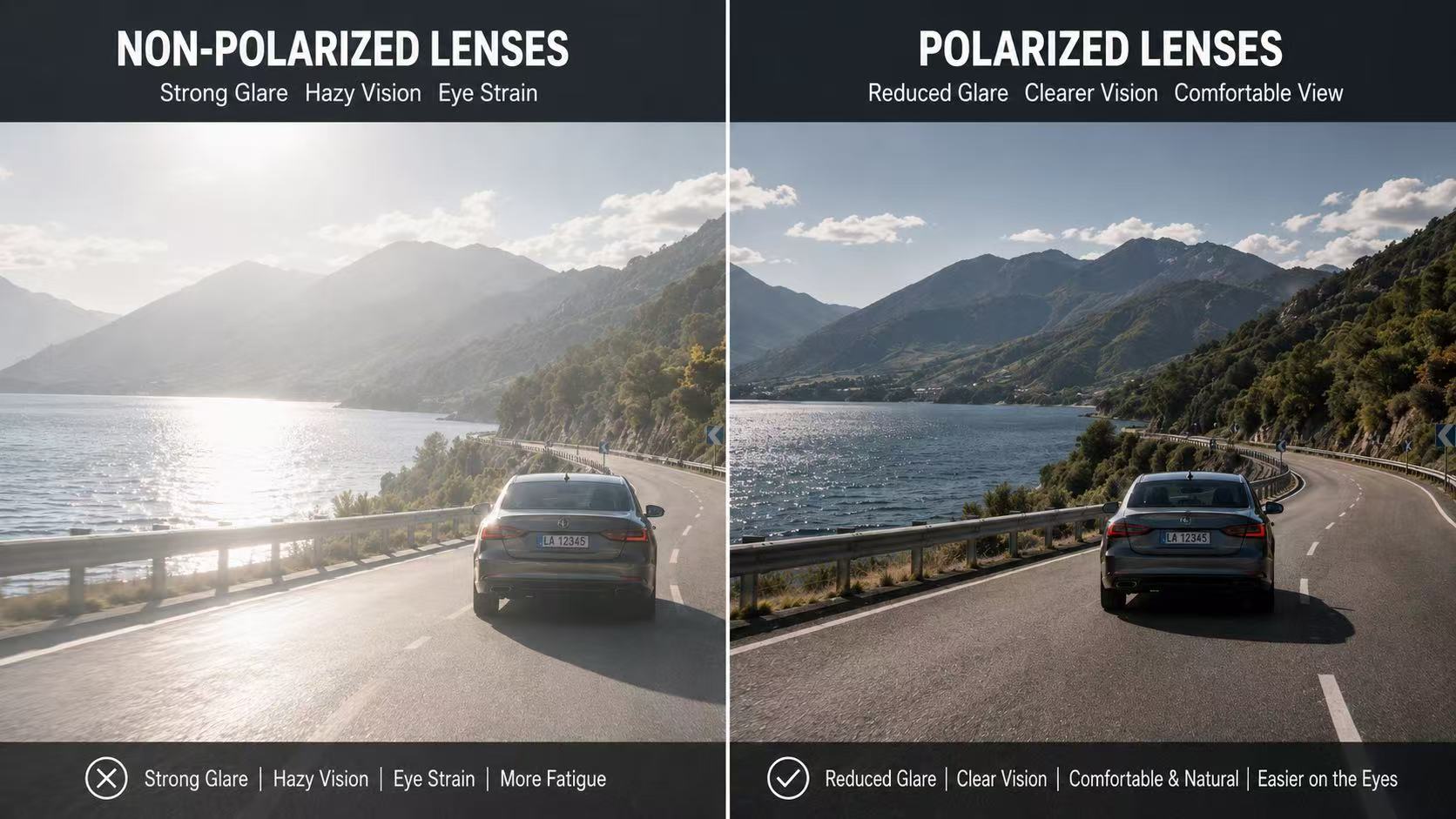
The main function of polarized sunglasses is to reduce glare reflected from flat surfaces such as water, roads, snow, and glass. This makes your vision clearer and can help reduce eye fatigue.
If you often drive, fish, cycle, ski, or spend time at the beach, polarized sunglasses can be very useful. For example, when driving during the day, polarized lenses can reduce glare from wet roads, car windows, and bright pavement, making your view more stable and comfortable.
However, polarization is not necessary for everyone. Some polarized lenses may affect the visibility of phone screens, car displays, dashboards, or HUD systems. In certain angles, screens may appear darker or show rainbow-like patterns.
That is why polarized sunglasses should be seen as a practical feature for specific situations, not a must-have label for every pair. If you often use navigation screens, digital displays, or mobile devices while wearing sunglasses, it is best to try them on before buying.
How to Choose Sunglass Lens Materials
Common sunglass lens materials include TAC, nylon, polycarbonate, CR-39, Trivex, and glass. There is no single best material for everyone. The right choice depends on your lifestyle and usage.
TAC lenses are commonly used in affordable polarized sunglasses. They are lightweight, budget-friendly, and suitable for daily commuting, travel, and casual outdoor use.
Glass lenses offer excellent optical clarity and scratch resistance. They often provide a premium visual experience, but they are heavier and less impact-resistant, making them less suitable for sports or high-intensity outdoor activities.
Polycarbonate and Trivex lenses are lighter and more impact-resistant, making them good choices for running, cycling, hiking, and sports. However, lower-quality versions may have more edge distortion or weaker scratch resistance.
When comparing sunglass lens materials, do not focus only on the material name. Pay attention to clarity, whether the lenses cause dizziness, how easily they scratch, and whether they include coatings such as anti-scratch, anti-smudge, or anti-reflective coatings.
AR anti-reflective coating is also worth considering. It helps reduce reflections on the lens surface, making your vision cleaner and more comfortable. This is especially helpful for long commutes, driving, and outdoor wear. With less reflected light, your eyes are less likely to feel tired.
Lens Color Also Affects Your Wearing Experience
Lens color is not just about appearance. It can change how you see contrast, brightness, and detail.
Gray lenses reduce brightness while keeping colors close to natural. They are suitable for city commuting, daily driving, and most everyday situations.

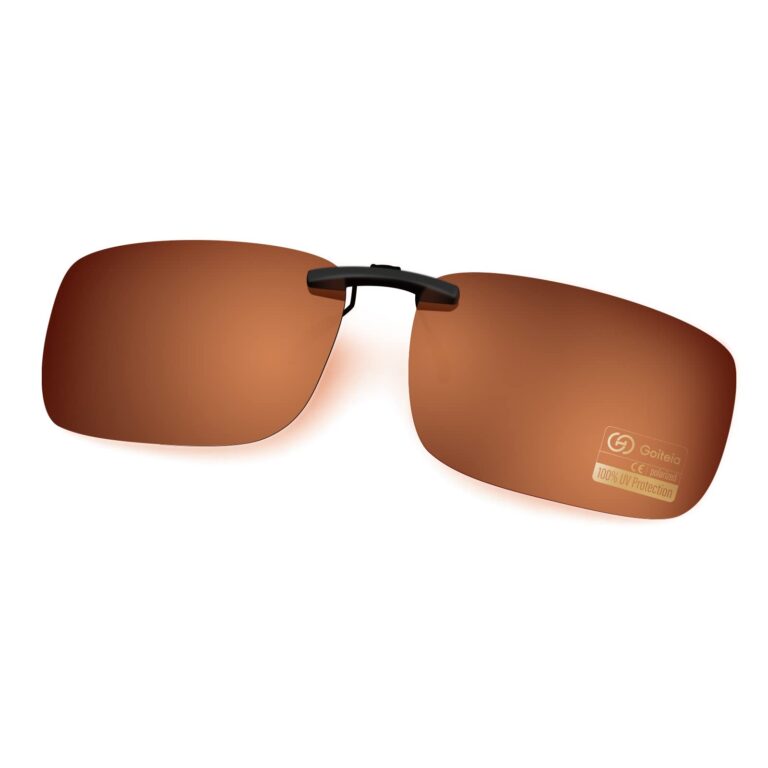
Brown or amber lenses can enhance contrast, making roads, trees, clouds, and ground details easier to see. They are good choices for driving, hiking, and outdoor activities.
Green lenses reduce brightness while keeping colors relatively natural. They are comfortable for long-term wear.
Yellow or orange lenses can improve contrast in low-light conditions, such as cloudy days, dusk, or certain sports settings. However, they are not ideal as main sunglasses for strong sunlight.
If you are not sure which color to choose, gray or green lenses are safe choices for daily commuting. Brown or amber lenses work well for driving and outdoor use. For beaches, high altitudes, or snowy environments, glare reduction and light transmission are more important than color alone.
Frame Comfort Matters More Than Face Shape Rules
Many people choose sunglasses based only on face shape, such as square frames for round faces or round frames for square faces. These tips can be useful, but the real key is whether the frame feels comfortable.
When trying on sunglasses, check these five points:
-
Frame width: If the frame is too narrow, it may press against your temples. If it is too wide, it may slide down easily.
-
Nose pads: If you have a low or narrow nose bridge, or if you sweat easily, choose sunglasses with adjustable or anti-slip nose pads.
-
Temple length: Temples that are too short may press behind your ears, while temples that are too long may feel unstable.
-
Weight: Glass lenses, thick acetate frames, and oversized sunglasses may look stylish, but they can press on the nose after long wear.
-
Coverage: For outdoor sports, beaches, high altitudes, or snowy areas, choose frames with better coverage to reduce side light entering your eyes.

When trying them on, lower your head, turn your head, smile, and walk around to see whether the sunglasses slide. If possible, wear them for about ten minutes to check for pressure on the nose bridge, temples, or behind the ears.
Frame material also affects comfort and usage:
-
Metal frames are usually lightweight, durable, and refined, making them suitable for business, commuting, and classic styles.
-
TR90 frames are flexible, lightweight, and resistant to breaking, making them ideal for sports, travel, and frequent daily wear.
If you often run, cycle, or do outdoor activities, prioritize lightweight frame materials with better grip and stability.
Sunglasses Buying Summary
A good pair of sunglasses should balance protection, comfort, clarity, and style.
Here is a simple five-step guide for how to choose the right sunglasses:
-
Start with UV400 sunglasses protection. This is the foundation.
-
Consider your usage scenario and decide whether you need polarized sunglasses, anti-slip sports features, or wraparound coverage.
-
Check the lens experience, including sunglass lens materials, lens color, clarity, AR anti-reflective coating, and scratch resistance.
-
Evaluate frame comfort, especially nose pads, frame width, temple length, and overall weight.
-
Finally, choose a style that fits your daily outfits and wearing frequency.
Sunglasses are both eye-protection tools and summer fashion accessories. The best pair is not necessarily the most expensive one. It should offer reliable protection, feel comfortable, provide clear vision, and match your lifestyle.
When the summer sun gets strong, a good pair of sunglasses helps you see the world more clearly and move through it with more ease.